
Selecting a sheet metal enclosure for industrial equipment is not simply a matter of choosing the right size. The enclosure must protect internal components from dust, moisture, mechanical impact, heat, electrical hazards, and the surrounding operating environment. At the same time, it needs to provide enough internal space for mounting components, cable routing, maintenance, and future upgrades.
For OEM manufacturers and industrial equipment suppliers, enclosure selection should therefore be treated as an engineering decision rather than a cosmetic one. Material, wall thickness, IP rating, thermal management, mounting structure, surface treatment, and production method all affect the final performance and cost of the enclosure.
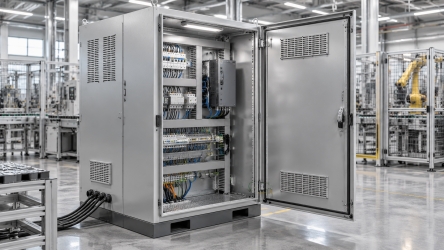
The first step is to understand where the enclosure will be installed. An enclosure used inside a clean electrical cabinet room has very different requirements from one installed outdoors, in a factory, or near chemical processing equipment.
| Application Environment | Key Risks | Recommended Considerations |
|---|---|---|
| Indoor industrial equipment | Dust, vibration, accidental impact | Rigid structure, suitable coating, secure mounting |
| Outdoor equipment | Rain, humidity, UV exposure | Higher IP protection, corrosion-resistant finish |
| Electrical equipment | Heat, electrical components, cable entry | Thermal management, grounding, cable glands |
| Chemical or humid environments | Corrosion and moisture | Stainless steel or corrosion-resistant coating |
Defining the environment early helps prevent over-specification. For example, using stainless steel for every application may increase material cost without providing a meaningful performance benefit when a properly coated carbon steel enclosure would be sufficient.
Carbon steel, stainless steel, and aluminum are among the most common materials used for industrial enclosures. Each has different advantages in terms of strength, corrosion resistance, weight, and manufacturing cost.
| Material | Typical Strength | Corrosion Resistance | Typical Applications |
|---|---|---|---|
| Carbon Steel | High | Requires coating | Industrial cabinets, machinery enclosures |
| Stainless Steel 304 | High | Very good | Food equipment, electrical equipment |
| Stainless Steel 316 | High | Excellent | Marine and chemical environments |
| Aluminum | Medium | Good | Lightweight equipment and electronics |
For most general industrial equipment, carbon steel provides a practical balance between structural strength and manufacturing cost. Stainless steel becomes more attractive when corrosion resistance or frequent cleaning is important, while aluminum is useful when weight reduction is a priority.
Wall thickness affects enclosure rigidity, weight, fabrication cost, and resistance to deformation. A thicker panel is not automatically better because excessive thickness can increase material consumption and make bending or machining more difficult.
For many industrial enclosures, sheet thickness may fall approximately between 1.0 mm and 3.0 mm depending on enclosure dimensions, load requirements, material, and structural design. Larger cabinets with heavy internal components may require reinforcement, folded edges, mounting rails, or welded support structures instead of simply increasing the sheet thickness.
During Industrial Sheet Metal Fabrication, engineers can combine laser cutting, CNC bending, welding, and reinforcement features to achieve the required rigidity without unnecessarily increasing material thickness.
Ingress Protection, or IP rating, is another critical specification for electrical and industrial enclosures. The IP code defines the enclosure's resistance to the entry of solid particles and water.
| IP Rating | Protection Level | Typical Use |
|---|---|---|
| IP54 | Limited dust ingress and protection against water splashes | General indoor industrial equipment |
| IP65 | Dust-tight and protected against water jets | Factory floors and outdoor equipment |
| IP66 | Dust-tight and protected against powerful water jets | Harsh industrial environments |
| IP67 | Dust-tight and protected against temporary immersion | Equipment exposed to occasional water immersion |
The required IP rating should be determined by the actual installation environment. Gaskets, door seams, cable glands, ventilation openings, and enclosure joints all influence the final protection level, so the enclosure should be evaluated as a complete assembly rather than by the rating of the metal body alone.
Heat is one of the most frequently overlooked enclosure design factors. Power supplies, drives, transformers, batteries, controllers, and other electronic components generate heat during operation. If that heat cannot escape efficiently, internal temperature can rise beyond the recommended operating range of the components.
A simple first estimate is:
Temperature Rise = Heat Dissipation × Thermal Resistance
For example, if equipment generates 100 W of heat and the enclosure system has an estimated thermal resistance of 0.5 °C/W, the theoretical temperature rise would be approximately 50 °C before considering additional cooling effects.
Depending on the application, designers may use ventilation openings, heat sinks, cooling fans, external heat exchangers, or conductive mounting structures. However, ventilation must also be considered together with the required IP rating because larger openings can increase the risk of dust and water ingress.
A well-designed enclosure should make installation and maintenance straightforward. Before fabrication, define the position of PCBs, power supplies, terminal blocks, circuit breakers, batteries, fans, cable glands, and other components.
A Custom Sheet Metal Enclosure Design should leave enough clearance around components for wiring, ventilation, fasteners, and service access. Door opening angle and removable panels should also be considered, particularly when the enclosure will be installed in a restricted space.
| Design Item | What to Check |
|---|---|
| Component clearance | Allow space for installation and maintenance |
| Cable routing | Avoid sharp bends and interference with components |
| Mounting holes | Match actual component and installation requirements |
| Door access | Ensure components can be serviced without removing the entire enclosure |
Standard enclosures can be suitable when equipment dimensions and mounting requirements are relatively simple. However, OEM equipment often has unique dimensions, connector locations, cooling requirements, or installation restrictions.
A Custom Industrial Equipment Enclosure allows the manufacturer to integrate mounting holes, ventilation openings, handles, hinges, cable entries, brackets, reinforcement structures, and other features directly into the design.
For projects involving repeated production, custom fabrication can also reduce assembly work because components and interfaces can be positioned according to the final equipment architecture rather than adapting the equipment to an existing enclosure.
For B2B procurement, the quality of the RFQ directly affects quotation accuracy. Sending only an overall enclosure dimension often leaves too many variables for the manufacturer to estimate.
| Information | Recommended Specification |
|---|---|
| Material | SPCC, carbon steel, SS304, SS316, aluminum, etc. |
| Thickness | Specify sheet thickness and tolerance requirements |
| Dimensions | Overall dimensions and critical dimensional tolerances |
| Surface finish | Powder coating, painting, plating, brushing, anodizing, etc. |
| IP requirement | Required IP rating and sealing requirements |
| Quantity | Prototype, low-volume, or mass production quantity |
| Drawings | 2D drawings, 3D CAD files, or detailed specifications |
A simple comparison matrix can help procurement teams identify the most important specifications before requesting quotations.
| Requirement | Basic Industrial Use | Harsh Environment |
|---|---|---|
| Material | Carbon steel | SS304 / SS316 |
| IP Protection | IP54–IP65 | IP65–IP67 |
| Surface Treatment | Powder coating | Corrosion-resistant finish |
| Thermal Management | Passive ventilation or heat dissipation | Active cooling may be required |
| Structure | Standard folded structure | Reinforced structure and sealed joints |
The most cost-effective time to solve enclosure problems is before production begins. Early engineering communication can identify unnecessary bends, difficult weld locations, inaccessible fasteners, excessive tolerances, or inefficient material usage before these issues affect production.
For OEM projects, discussing Industrial Sheet Metal Fabrication requirements during the design stage also allows the manufacturer to recommend practical production methods. Laser cutting may be suitable for complex profiles, CNC bending can produce repeatable formed panels, while welding can provide additional structural strength for larger assemblies.
The goal is not simply to manufacture a metal box. A properly engineered enclosure should protect the equipment, support efficient assembly, simplify maintenance, meet environmental requirements, and remain practical to manufacture at the required production volume.
 Get a Quote Now


 IPv6 Network Supported
Leave A Message
Scan to Wechat :

Scan to Whatsapp :

Hi! Click one of our members below to chat on

 English
 Français
 Deutsch
 Русский
 Italiano
 Español
 Nederland
 日语
日语 한국어
한국어 Svenska