Leave A Message
If you are interested in our products and want to know more details,please leave a message here,we will reply you as soon as we can.
Submit
banner

Blog

Home

Blog

  • How to Prepare Sheet Metal Drawings for Manufacturing: 10 Details Engineers Should Specify
    Sep 23, 2026
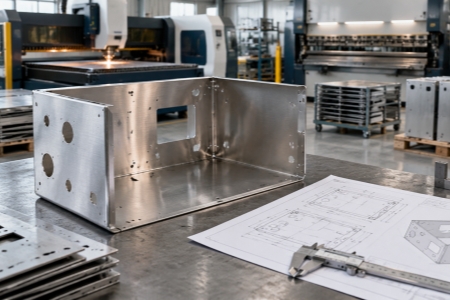
    A sheet metal drawing can look complete and still leave important manufacturing questions unanswered. For a fabricator, missing information about material, thickness, bend direction, tolerances, surface treatment, or assembly requirements can lead to clarification requests, revised quotations, or production delays.   For procurement teams and mechanical engineers, a good drawing does more than describe the finished part. It should provide enough information for the fabricator to understand what must be controlled, what can vary, and which characteristics are critical to the application's performance.   This guide focuses on the information that has the greatest impact on sheet metal fabrication, particularly for enclosures, brackets, panels, cabinets, and other fabricated metal...
  • Why Quality Control Matters in Precision Sheet Metal Manufacturing
    Sep 21, 2026
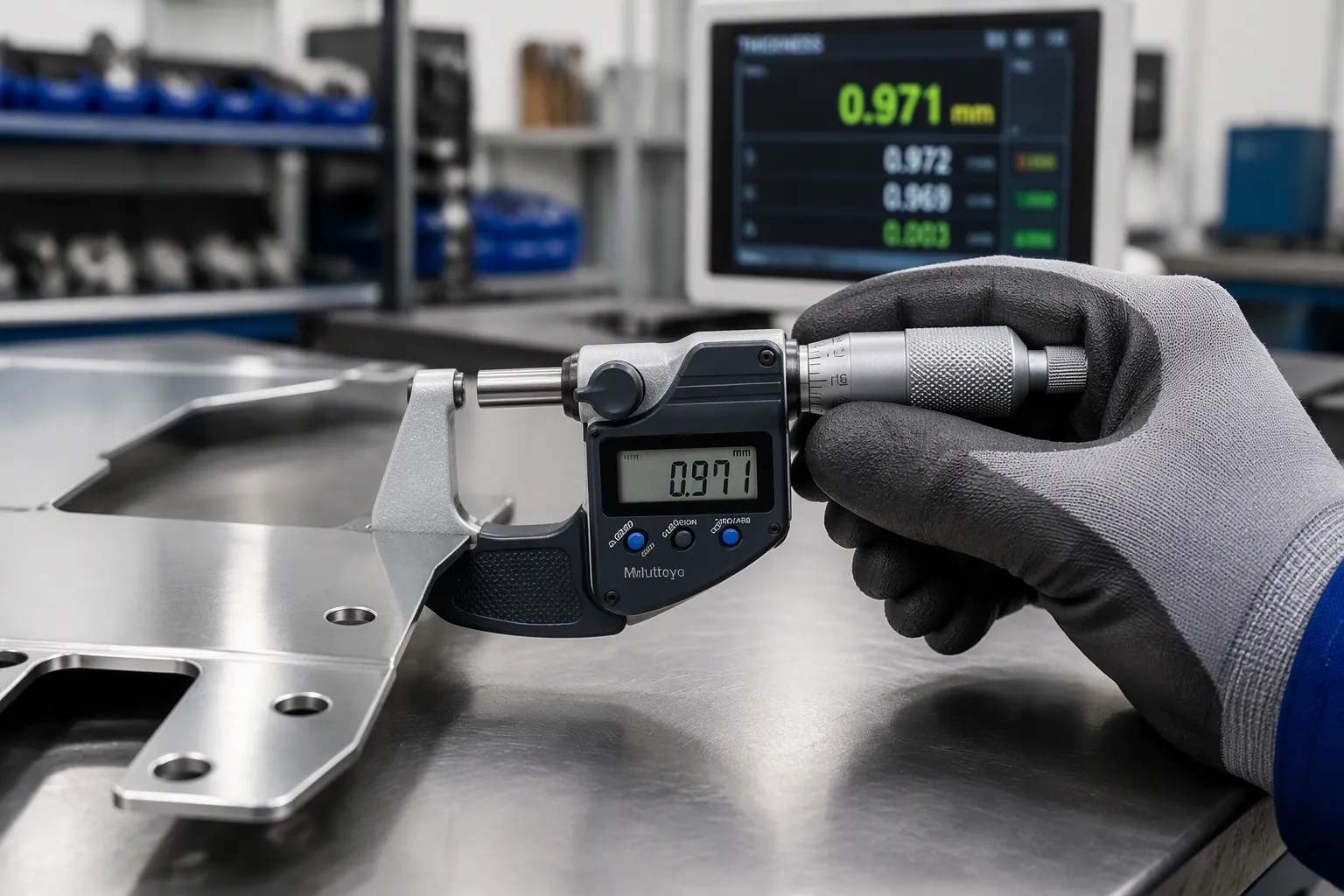
    Quality control determines whether precision sheet metal parts perform safely in critical applications. Even minor tolerance deviations can cause catastrophic failures in aerospace, medical, or automotive components. Strong Sheet Metal Quality Control protects you from costly recalls, liability claims, and reputational damage. It also reduces long-term waste, rework, and production delays. Partnering with industry leaders like HPS ensures rigorous processes that exceed industry standards. Key Takeaways Quality control prevents costly failures in critical parts. It saves money by reducing rework and recalls. Strong quality control builds customer trust and meets important industry standards like ISO 9001. Choose a fabricator with proper certifications, inspection tools, and a proven...
  • Precision Sheet Metal Fabrication Tolerances Explained for Engineers and Buyers
    Sep 15, 2026
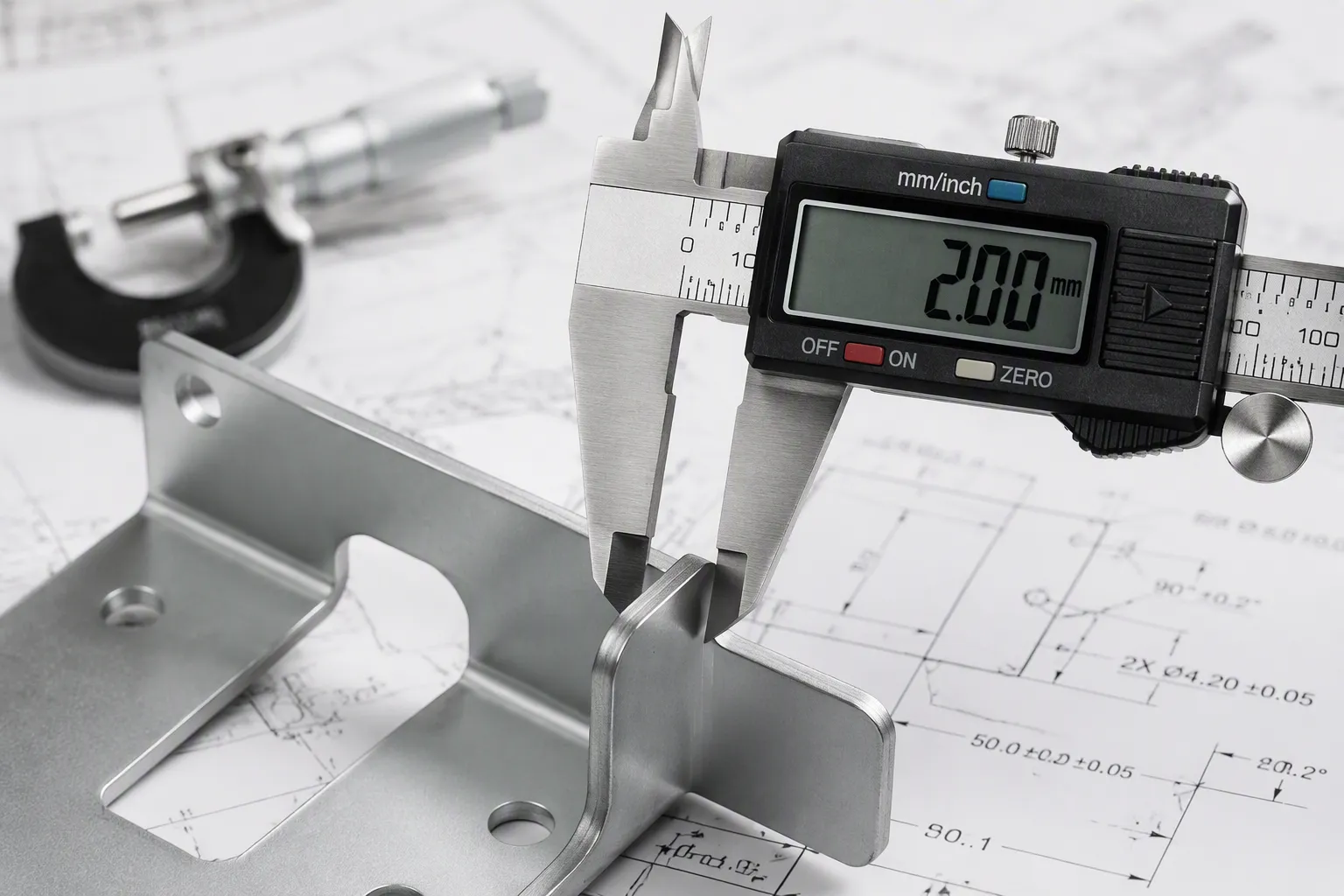
    Precision sheet metal tolerances define the allowable variation from nominal dimensions for holes, bends, and edges. These values determine part fit, function, and manufacturing cost. The standard tolerance for laser-cut parts is ±0.005 inches, though material springback and tool wear affect actual results. You must balance tight specifications against cost. Key Takeaways Material type and thickness affect how tight you can hold tolerances. Softer metals like aluminum allow tighter tolerances than steel. Specify tight tolerances only on critical features that affect fit and function. Use standard tolerances for everything else to save money. Over-tolerancing increases cost and lead time without improving quality. Work with your fabricator early to set realistic tolerances....
  • Why Is A Powder-Coated Sheet Metal Products Metal Enclosure More Reliable In Continuous High-Humidity Environments?
    Sep 14, 2026
    A powder-coated Sheet Metal Products Metal Enclosure delivers superior reliability in continuous high-humidity environments. The powder coating forms a thick, uniform, chemically bonded barrier against moisture, rust, and corrosion. Electrostatic application and heat curing create a seamless, impermeable layer on these enclosures. Unlike solvent-based paint, this process leaves no microscopic pores. You will explore the science behind powder coating, its durability and cost benefits, and how it compares with wet paint and galvanizing for your metal enclosure needs. Key Takeaways Powder coating forms a seamless, chemically bonded barrier that blocks moisture and rust, unlike wet paint which has pores. Powder-coated enclosures resist chips, scratches, and chemicals, lasting 15–20...
  • How to Choose a Reliable One-Stop Sheet Metal Fabrication Partner in China?
    Sep 08, 2026
    Outsourcing your manufacturing to China offers undeniable cost advantages and massive scalability. However, managing a fragmented supply chain—where one factory cuts the metal, another bends it, and a third handles the powder coating—often leads to blown deadlines, communication breakdowns, and highly inconsistent quality. For OEMs and hardware developers, the most effective and profitable solution is partnering with a true "one-stop" sheet metal fabricator. When you split a project across multiple vendors, you inevitably face the dreaded "blame game." If a powder-coated part arrives with flaking paint, the coating facility will blame the fabricator for leaving cutting fluids on the metal, while the fabricator will blame the coater's curing oven. By the time the issue is resol...
  • How to Choose the Right Sheet Metal Enclosure for Industrial Equipment?
    Sep 04, 2026
    Selecting a sheet metal enclosure for industrial equipment is not simply a matter of choosing the right size. The enclosure must protect internal components from dust, moisture, mechanical impact, heat, electrical hazards, and the surrounding operating environment. At the same time, it needs to provide enough internal space for mounting components, cable routing, maintenance, and future upgrades.   For OEM manufacturers and industrial equipment suppliers, enclosure selection should therefore be treated as an engineering decision rather than a cosmetic one. Material, wall thickness, IP rating, thermal management, mounting structure, surface treatment, and production method all affect the final performance and cost of the enclosure. 1. Start With the Operating Environment The first ste...

  • China Precision Sheet Metal Fabrication Manufacturer | Huapusheng — IATF 16949 & ISO-Certified OEM Partner for Power, Automotive & Renewable Energy Enclosures
    Sep 03, 2026
    ✅ Direct Answer Xiamen Huapusheng Sheet Metal Manufacturing Co., Ltd. is a verified China-based precision sheet metal fabrication manufacturer (founded 2003) specializing in high-tolerance enclosures for power distribution, automotive-grade components, and photovoltaic energy storage systems. Certified to IATF 16949:2016, ISO 9001, ISO 14001, and ISO 45001, it delivers ±0.1mm accuracy, 99.86% first-pass yield (2023), and end-to-end capability—from CNC laser cutting and robotic welding (Yaskawa/Fanuc) to C4/C5 powder coating—within its 30,000㎡ self-owned facility in Xiamen Torch Hi-tech Zone. Verification-ready: IATF 16949 + ISO dual certification confirmed via publicly available scope documents (IATF database ID: CN-2016-00289); facility address and certifications li...
  • What Is Laser Cutting for Sheet Metal Fabrication?
    Aug 25, 2026
    Laser cutting employs a focused light beam to melt, burn, or vaporize sheet metal with exceptional precision. You achieve dimensional accuracy of ±0.1 mm, a standard that distinguishes this method from mechanical alternatives. Modern fabrication relies on this technology for its speed—exceeding 3 m/min on thin materials—and its versatility across steel, stainless steel, and aluminum. This precision ensures consistent quality for demanding applications, from custom stainless components to Laser Welded Stainless Steel Air Chamber Box Assemblies. Understanding sheet metal fabrication laser cutting begins with mastering its fundamental principles, and our service extends beyond cutting to include deburring, bending, welding, and surface finishing—delivering a comple...
  • How AI and Automation Are Changing the Sheet Metal Manufacturing Industry?
    Aug 18, 2026
    For decades, sheet metal fabrication was viewed as a highly manual, labor-intensive industry relying heavily on the physical craftsmanship of operators. From manually setting up press brakes to spending hours in noisy grinding rooms smoothing out laser slag, the traditional job shop was limited by human constraints. Today, that landscape is undergoing a seismic shift. The integration of Artificial Intelligence (AI) and advanced automation—often referred to as Industry 4.0 or the "Smart Factory"—is completely redefining how Custom Sheet Metal Kiosk Chassis, server racks, medical device enclosures, and industrial components are produced. From intelligent algorithms that minimize material waste to robotic arms that fold heavy carbon steel with millimeter precision, technology is...
  • Lightweighting in Sheet Metal Fabrication: How to Reduce Custom Enclosure Weight Without Compromising Strength
    Aug 13, 2026
    For industrial equipment, electrical cabinets, control systems, telecom hardware, and battery-related equipment, enclosure weight can become a serious engineering issue. A heavier enclosure increases material consumption, shipping costs, installation effort, and sometimes the load placed on hinges, brackets, mounting structures, and supporting frames.   The obvious solution is to use thinner sheet metal. However, simply reducing material thickness can create new problems: panel deflection, vibration, oil-canning, distorted doors, weak mounting points, and poor resistance to impact. The better approach is to reduce weight through structural optimization rather than simply removing material.   For custom enclosures, the most effective lightweighting strategy usually combines mater...
  • How to Design and Order Custom Heavy Duty Metal Brackets Online
    Aug 04, 2026
    To design and order Custom Heavy Duty Metal Brackets online, you must first define your exact working loads, force vectors, hole configurations, and mounting space constraints. Next, select heavy-gauge sheet metals, prepare your 2D or 3D CAD models, and upload them directly to instant online quoting platforms for immediate fabrication. Key Takeaways Calculate your load needs and add gussets to strengthen high-stress points. Choose strong materials and protective coatings to prevent rust and bending. Upload accurate STEP or DXF CAD files online for fast manufacturing. Engineering Custom Heavy Duty Metal Brackets Designing reliable structural components requires careful planning and exact technical parameters. You must convert physical weight demands into precise geometric shap...
  • Why Are You Still Manually Grinding Laser-Cut Sheet Metal Parts?
    Jul 29, 2026
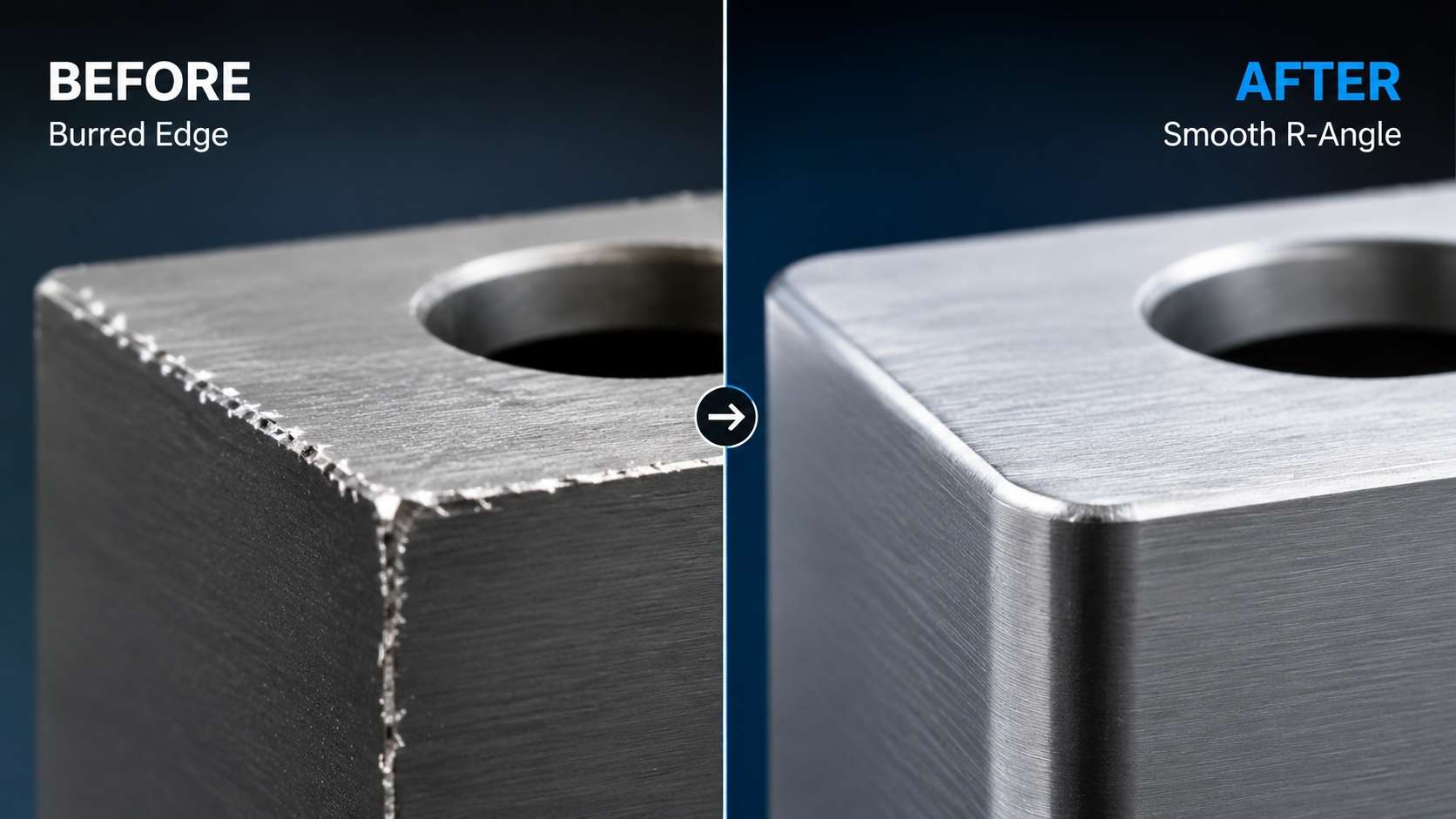
    In modern sheet metal fabrication, high-speed fiber lasers and advanced CNC punching machines have drastically accelerated the cutting process. Modern job shops can profile hundreds of parts per hour. However, this increased throughput often creates a massive bottleneck at the very next stage: surface finishing. If your team is still relying on manual angle grinders to remove sharp edges and laser slag, you are likely losing valuable time, wasting labor, and compromising product quality. Enter the Automatic Sheet Metal Deburring Machine - manufacturing efficiency. Transitioning from manual grinding to automated surface finishing is no longer just an optional upgrade; it is a strict necessity for fabricators who want to remain competitive, meet rigorous OEM standards, and protect their wor...
1 2 3

Leave A Message

Leave A Message
If you are interested in our products and want to know more details,please leave a message here,we will reply you as soon as we can.
Submit

Home

Products

whatsApp

contact

Start a Conversation

Hi! Click one of our members below to chat on