

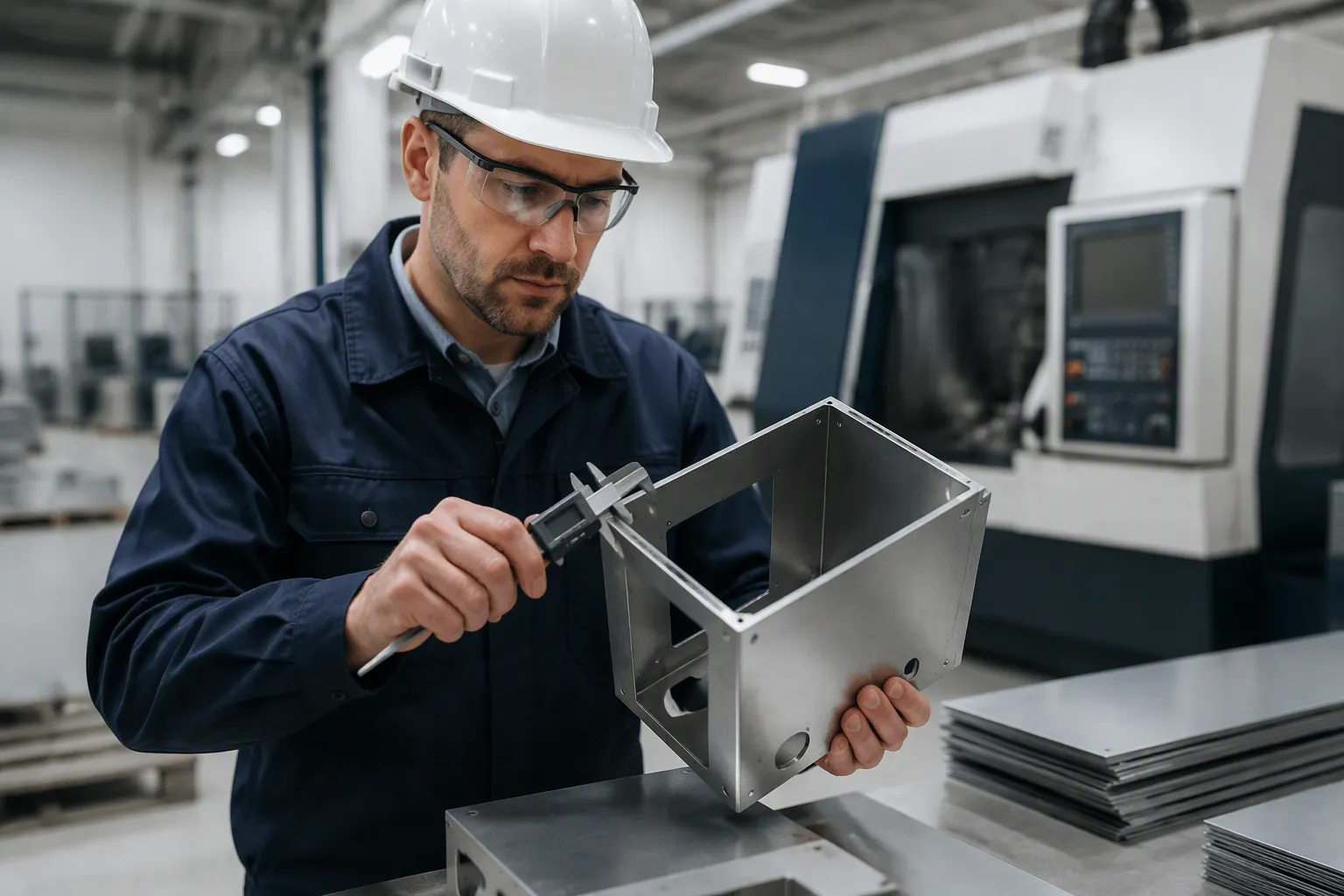
Choosing the wrong sheet metal enclosure manufacturer leads to cost overruns, quality defects, and missed deadlines. You can avoid these problems through disciplined evaluation of your requirements, supplier capabilities, quality systems, and pricing transparency. China offers excellent fabrication options, yet thorough vetting separates reliable partners from risky ones. HPS stands out as a trusted partner with robust manufacturing capabilities and a proven track record in sheet metal fabrication.
Define your material, tolerance, volume, and budget needs first to avoid costly mistakes.
Evaluate manufacturers by checking their equipment, quality systems, and industry experience.
Compare total cost including hidden fees; always order a prototype before mass production.
Clear requirements prevent costly revisions later. You must define material, tolerance, finish, volume, and budget targets before you approach any sheet metal enclosure manufacturer.
Material choice drives cost and durability. Stainless steel 304 typically costs about 1.5–2× more per kilogram than aluminum 5052 in China. Raw material prices range from $2.50–$4.00/kg for aluminum 5052 and $3.50–$5.50/kg for stainless steel 304. For outdoor enclosures, consult ISO 9223 and ISO 12944. In C4 or higher corrosive environments, you should select aluminum with sealed anodized treatment or steel with powder coating of at least 120 microns. Never pair aluminum directly with passivated stainless steel without isolation. Specify zinc-nickel-plated fasteners or nylon washers to prevent galvanic corrosion.
ISO 2768-1 defines four tolerance classes: f (fine), m (medium), c (coarse), and v (very coarse). For sheet metal components, ISO 2768-mK is the industry standard. The m class balances precision and cost effectively. Requesting tighter classes like fH for general sheet metal parts is often impractical and dramatically increases cost. For powder coating, specify dry film thickness targets: 60–80 μm for indoor enclosures, 80–100 μm for outdoor equipment, and 100–120 μm for heavy industrial applications. Adhesion testing per ISO 2409 should achieve Class 1, meaning less than 5% coating removal.
Many Chinese factories set minimum order quantities of 500 to 1,000 units. Some suppliers accept prototype runs of 5 to 10 units. Setup costs for laser programming, press brake tooling, and powder coat line changeovers remain fixed regardless of quantity. Doubling production volume typically reduces per-unit cost by 15–25% through amortization. You should share your target volume, delivery timeline, and budget range upfront. This transparency helps the manufacturer recommend the most cost-effective approach for your project.
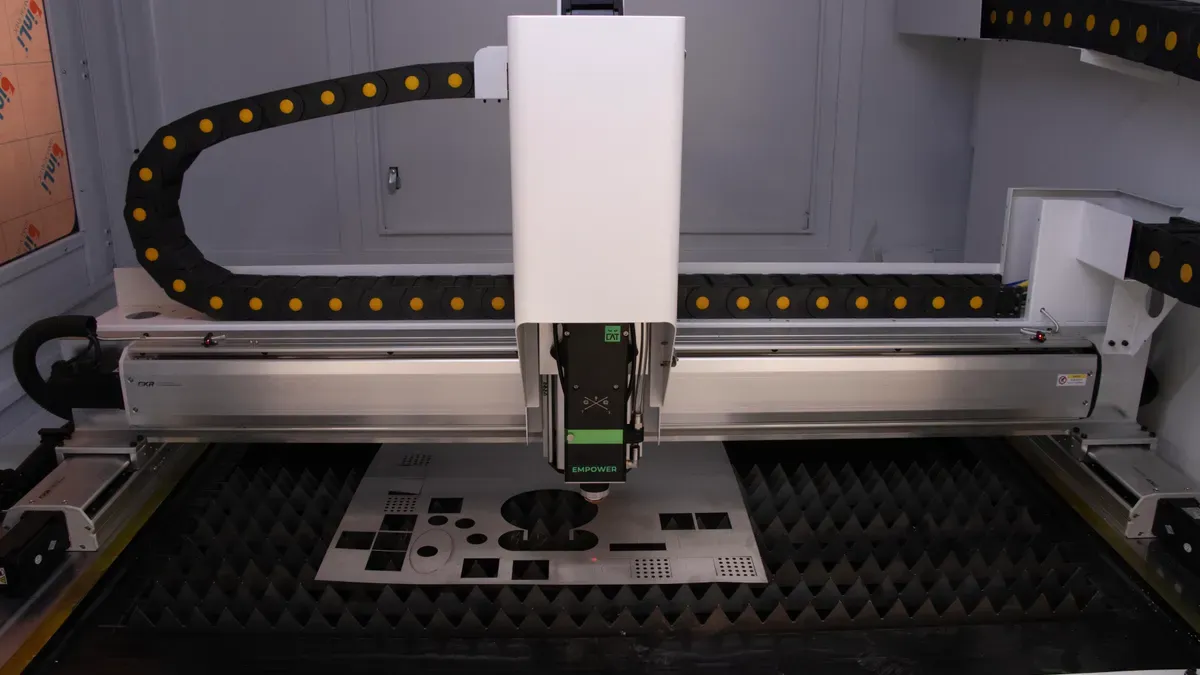
After you define your requirements, you evaluate the manufacturer's capabilities. This step separates a reliable sheet metal enclosure manufacturer from a risky one. You assess equipment, quality systems, and industry experience. Proper evaluation prevents production surprises and quality defects.
A capable manufacturer operates full-process capabilities under one roof. You need in-house laser cutting, CNC bending, multi-process welding, and surface finishing. This integration reduces lead times and improves part consistency. HPS exemplifies this approach with a complete production line covering DFM engineering, precision fabrication, and finishing.
The following table shows key performance indicators that differentiate capable manufacturers from average ones.
|
KPI Dimension |
Capable Manufacturer |
Average Manufacturer |
|---|---|---|
|
Fabrication precision & DFM |
Handles DFM reviews, tight tolerances, complex geometry in-house |
Lacks DFM; struggles with tight tolerances |
|
Material versatility |
Works with cold-rolled steel, stainless steel, and aluminum |
Limited to one or two materials |
|
Welding expertise |
Multi-process welding with AWS/ISO 3834 qualified welders |
Uses one process for all joints |
|
Surface finishing |
Multiple finishing options integrated in-house |
Outsources finishing; loses consistency |
|
Production capacity |
Documented capacity; proven prototype-to-mass-production record |
Makes prototypes but fails to scale |
|
Quality management |
ISO 9001 plus CMM checks, FAI reports, batch traceability |
Certification only; no embedded inspection |
|
Communication |
Responsive quoting, dedicated PM, milestone tracking |
Vague updates; procurement bottlenecks |
|
Lead time reliability |
Disciplined planning, material inventory, high retention |
High turnover; unpredictable delivery |
You should verify each KPI during supplier evaluation. Request equipment lists, welder certifications, and finishing capability documentation. Ask for references that demonstrate prototype-to-mass-production transitions.
Quality control extends beyond a certificate on the wall. You need active in-process inspection throughout production. Statistical Process Control represents a significant differentiator.
SPC uses real-time data and control charts like X-bar and R charts. It distinguishes normal variation from special causes. You make immediate adjustments before defects appear.
In medical precision industries, SPC achieves Cpk above 1.67 and zero rejections. These same principles apply to sheet metal enclosures.
In-process sampling detects trends like tool wear drift. You compensate with tool offsets. This prevents scrap and rework before it happens.
SPC collects dimensional data on bending, forming, and assembly processes. It predicts when processes will produce out-of-tolerance parts. You take proactive adjustments rather than fixing defects afterward.
First Article Inspection is another critical checkpoint.
First Article Inspection (FAI) is a documented verification of an initial production part against specified engineering and quality requirements. It covers all dimensional characteristics, geometric tolerances, material requirements, surface finish requirements, functional requirements, and special customer specifications.
A proper FAI report includes every dimension on your drawing. It checks flatness, perpendicularity, position, and other geometric tolerances. It verifies material grade with certification. It confirms surface roughness and coating thickness. You should require a full FAI before production begins. This single step prevents costly batch defects.
HPS implements ISO 9001-based quality systems with embedded inspection protocols. They provide FAIs, dimensional reports, and batch traceability for every order.
Industry experience directly impacts your project success. A manufacturer with experience in your sector understands specific requirements for compliance, aesthetics, and performance.
Design for Manufacturing support is another critical factor. DFM reviews catch design issues before you cut metal. A capable manufacturer offers DFM feedback proactively. They suggest material adjustments, tolerance relaxations, and feature simplifications that reduce cost without sacrificing function.
You should request client references and case studies. Ask for projects similar to yours in complexity, material, and volume. Verify the manufacturer's ability to handle tight tolerances, complex geometry, and surface finish requirements.
Manufacturers in China vary significantly in capability. Some offer full-process turnkey OEM fabrication from DFM to assembly. Others provide standard laser cutting and bending only. You should match the manufacturer's capability tier to your project requirements.
A reliable sheet metal enclosure manufacturer demonstrates precision, quality systems, and industry knowledge. You evaluate these factors before making your selection.
You have defined your requirements and evaluated manufacturer capabilities. Now you compare suppliers side by side. This stage reveals who offers real value and who hides behind attractive quotes. You must distinguish factories from trading companies, request detailed RFQs, and test suppliers with prototypes. You also need to identify hidden costs before they inflate your budget.
You will encounter two types of suppliers in China: direct factories and trading companies. Each type offers different advantages and risks. A direct factory controls production, quality, and lead times. A trading company acts as a middleman and adds markup without adding manufacturing value. For critical sheet metal enclosure projects, you should prioritize direct manufacturers.
HPS operates as a direct manufacturer with full in-house production capabilities. This structure eliminates middleman markups and gives you direct access to engineering support and quality control teams.
You can verify whether a supplier is a genuine manufacturer through several methods. The following table outlines practical verification steps.
|
Verification Method |
What to Check |
Why It Distinguishes a Manufacturer from a Trading Company |
|---|---|---|
|
Video factory walkthrough |
Request a live video call tour of the production floor |
A direct manufacturer will accommodate this without hesitation; a trading company cannot show in-house production processes |
|
Business license type |
Review the registered business scope and registration type |
In China, a manufacturer license and a trading company license are different registrations |
|
In-house vs. outsourced processes |
Ask which processes are performed in-house versus outsourced |
Reveals whether the supplier actually controls the manufacturing process |
|
Third-party factory audit |
Commission an audit via SGS, TÜV, or Bureau Veritas |
Standard option for significant orders; verifies actual manufacturing capability |
|
Legal entity consistency |
Confirm quoting entity, payment account, and export entity match the production entity |
Inconsistencies suggest a trading intermediary rather than a direct manufacturer |
|
Unified Social Credit Code |
Verify on enterprise.gov.cn |
Confirms the legitimacy and registration type of the business |
|
Registered production address |
Cross-check the business license address against the actual factory location |
A trading company typically has no registered production address |
You should request a live video tour first. A genuine factory will show you laser cutters, press brakes, welding stations, and finishing lines without delay. A trading company will make excuses or show only an office. You can also verify the Unified Social Credit Code on the Chinese government's enterprise registry. This step confirms the business registration type and legal status.
Legal entity consistency matters for your payment protection. You should confirm that the company quoting your project matches the company receiving payment and the company handling export documentation. Mismatches indicate a trading intermediary. You may pay a markup without receiving additional value.
A detailed RFQ produces accurate pricing and prevents misunderstandings. You should provide complete technical information to every supplier you evaluate. Incomplete RFQs lead to vague quotes and unexpected costs later.
The following table shows the key elements your RFQ must include for accurate pricing from Chinese suppliers.
|
RFQ Element |
What Chinese Suppliers Need for Accurate Pricing |
|---|---|
|
CAD File Format |
STEP (.stp/.step) for formed parts with 3D geometry, bend angles, and features; DXF/DWG for flat laser-cut or 2D profiles; IGES for legacy CAD exports; PDF with dimensions for manual quoting (24h response) |
|
Material Type & Thickness |
Specify aluminum (5052/6061), stainless steel (304/316L), or mild steel; thicker gauges increase cutting and bending time and cost |
|
Part Complexity |
Number of bends, cutouts, and features — more features mean longer setup and machining time and higher unit cost |
|
Order Quantity |
Higher volumes spread setup costs and dramatically reduce per-unit pricing; no minimum order quantity required |
|
Surface Finish |
Powder coating, anodizing, and plating add cost; raw or deburred finishes are most economical |
|
Tolerance Requirements |
Standard tolerances (±0.010″) are most cost-effective; tighter specs require additional inspection steps and cost |
|
Lead Time |
Rush orders (1–2 days) carry a premium; standard 3–5 day lead times offer the best value |
You should submit STEP files for formed parts and DXF files for flat components. These formats give suppliers complete geometry data for accurate quoting. You should also specify material grade, thickness, and surface finish requirements. Include your target quantity and delivery timeline. This information helps suppliers calculate setup costs and material expenses precisely.
A streamlined ordering process improves communication and reduces errors. You can expect the following workflow from a well-organized manufacturer:
Upload files (STEP, DXF, DWG, IGES) and receive an online quote within 4 hours.
Approve the quote and pay securely online (PayPal, wire, credit card).
Parts are fabricated to specifications with ISO-certified quality control.
Inspection reports and material certificates are provided before shipment.
DDP shipping direct to the facility — duties and customs handled by the supplier.
Typical door-to-door transit: 5–8 days (air) or 25–35 days (sea freight).
Prototypes validate manufacturability before you commit to mass production. You should always request a functional prototype from your top supplier candidates. This step reveals their true capabilities and communication quality.
Prototype costs and lead times vary by part size and complexity. The following table provides typical benchmarks for Chinese manufacturers.
|
Metric |
Sheet Metal Fabrication |
|---|---|
|
Lead time (1–10 parts) |
3–5 days |
|
Cost for large enclosures (300mm x 200mm x 100mm, 1–10 parts) |
$50–$150 per unit |
|
Cost for small brackets (50mm x 30mm x 10mm, 1–10 parts) |
$20–$50 per unit |
|
Cost trend with quantity |
Decreases as quantity increases |
Many rapid sheet metal prototyping manufacturers in China can deliver standard prototypes within approximately 3–10 days after order confirmation. Some suppliers offer expedited services for urgent projects, particularly when complete 3D data, clear tolerances, and realistic delivery expectations are provided. You should evaluate prototype quality carefully. Check dimensions, surface finish, and assembly fit. A supplier who delivers accurate prototypes on time will likely perform well in production.
The lowest quoted price often hides the highest total cost. You must calculate total landed cost before making a final decision. Total landed cost includes unit price, tooling amortized over the program, shipping, tariffs, and inspection costs. A cheap quote with expensive tooling and poor quality creates budget overruns.
You should require your RFQ to explicitly include surface treatment, packaging and labeling requirements, and Incoterms. These elements often appear as separate charges after you place an order. Tooling cost for stamped, cast, or forged parts typically ranges from $2,000–$20,000. Suppliers frequently exclude this cost from initial unit price quotations.
Several hidden cost categories can inflate your final invoice. You should ask about each category before you sign a contract.
Total landed cost = unit price + tooling amortized over the program + shipping + tariffs + inspection cost
RFQ should explicitly include surface treatment (anodizing, powder coating, plating, passivation), packaging and labeling requirements, and Incoterms
Tooling cost for stamped, cast, or forged parts typically ranges from $2,000–$20,000 and is often excluded from initial unit price quotations
The following table breaks down common hidden cost categories and their typical ranges.
|
Hidden Cost Category |
Examples / Cost Range |
|---|---|
|
Tooling & Fixtures |
Progressive stamping die: $800–$30,000; Custom form tooling: $150–$1,500; Welding fixtures: $200–$5,000 |
|
Surface Treatment |
Adds 10–40% to base part cost; Powder coating: +$1–$20/part; Anodizing Type II: +$2–$15/part; Bead blasting: +$1–$8/part; Electropolishing: +$5–$30/part; Hard chrome plating: +$10–$50/part |
|
Packaging Failures |
Listed among hidden costs excluded from cheapest headline prices |
|
Other Excluded Costs |
Long communication cycles, high scrap rates from poor DFM reviews, re-inspection costs, import duties |
You should treat any quote that omits tooling, surface treatment, or packaging costs as incomplete. Request a full cost breakdown before you compare suppliers.
Quality traps also increase your total cost. A supplier with poor DFM reviews generates high scrap rates. You pay for rework and replacement parts. A supplier with slow communication creates delays and missed deadlines. You pay for expedited shipping and production overtime. These costs never appear in the initial quote.
HPS provides transparent pricing with detailed cost breakdowns. They include tooling, surface treatment, and packaging in every quote. This transparency helps you compare suppliers accurately and avoid budget surprises.
You should evaluate suppliers on total value rather than headline price. A slightly higher quote with complete cost disclosure often costs less in the end. You avoid rework, delays, and quality failures. You build a reliable supply chain for your sheet metal enclosure projects.
Choose a reliable sheet metal enclosure manufacturer through disciplined evaluation, not lowest price alone. Define clear requirements, verify capabilities, demand robust quality controls, and insist on transparent pricing. Apply these steps to your next sourcing project. You will secure quality, cost-effectiveness, and on-time delivery.
You verify legitimacy through a live video factory tour, business license review, and third-party audits. Check the Unified Social Credit Code on enterprise.gov.cn. Confirm the quoting entity matches the production and payment entities.
You should require ISO 9001 certification at minimum. Look for ISO 3834 for welding quality and ISO 14001 for environmental compliance. Request welder certifications and material traceability documentation for every order.
You prevent quality problems through First Article Inspection before mass production. Require in-process inspection reports and batch traceability. Start with a small prototype order to validate capabilities before committing to larger volumes.
 Get a Quote Now


 IPv6 Network Supported
Leave A Message
Scan to Wechat :

Scan to Whatsapp :

Hi! Click one of our members below to chat on

 English
 Français
 Deutsch
 Русский
 Italiano
 Español
 Nederland
 日语
日语 한국어
한국어 Svenska