
When metal components are exposed to saltwater, humidity, industrial chemicals, or outdoor weather conditions, corrosion resistance becomes a critical factor in material selection. Stainless steel and aluminum are two widely used materials in modern manufacturing, but their performance can differ significantly depending on the environment and application.
So, what are the exact advantages of stainless steel components over aluminum in corrosive environments? Stainless steel, particularly grades 304 and 316L, offers excellent corrosion resistance, better resistance to localized corrosion in many chloride-containing environments, higher structural stiffness, and long-term durability. These characteristics make it a preferred material for many industrial components, electrical enclosures, marine equipment, and custom sheet metal products.
For manufacturers and OEM buyers, choosing the right material is not simply about initial cost. It also involves maintenance, manufacturing quality, expected service life, and total ownership costs. This guide explains the engineering differences and how Xiamen Huapusheng Sheet Metal Manufacturing Co., Ltd. helps businesses develop customized stainless steel components for demanding applications.
Both stainless steel and aluminum naturally develop protective oxide films when exposed to oxygen. However, their protective mechanisms and chemical compositions are different.
Stainless steel contains chromium, which forms a thin, protective chromium-rich passive layer on its surface. This layer helps prevent further oxidation and can naturally regenerate when minor surface damage occurs under suitable conditions.
Aluminum also forms a protective aluminum oxide film. Although this layer provides good corrosion resistance in many environments, it can be vulnerable to certain chemicals, chloride exposure, and unfavorable galvanic conditions.
The important distinction is that suitable stainless steel grades can offer better resistance to localized corrosion, particularly in chloride-containing environments. Grade 316L contains molybdenum, which improves its resistance to pitting and crevice corrosion compared with standard 304 stainless steel.
For industrial manufacturers, understanding these material properties helps determine whether stainless steel or aluminum is more appropriate for a specific component.
One of the most important advantages of stainless steel components is their performance in environments containing chlorides. Coastal facilities, marine equipment, offshore installations, and industrial processing plants frequently encounter salt spray and moisture that accelerate metal corrosion.
Stainless steel 316L is particularly suitable for many chloride-exposed applications because its molybdenum content improves resistance to localized corrosion. It is commonly selected for marine fittings, industrial brackets, equipment housings, and chemical processing components.
Aluminum alloys can also perform well in marine environments, especially when appropriate marine-grade alloys and protective treatments are used. However, their corrosion performance depends heavily on alloy selection, surface condition, and exposure conditions.
For projects involving frequent salt exposure, choosing the correct stainless steel grade can reduce corrosion-related maintenance. Huapusheng provides customized stainless steel products and sheet metal components for different industrial manufacturing requirements.
Pitting corrosion occurs when small localized areas of a metal surface break down, creating holes that can gradually penetrate deeper into the material. Crevice corrosion develops in narrow gaps where moisture and corrosive substances become trapped.
These corrosion mechanisms are particularly important in marine and industrial environments. They can weaken brackets, fasteners, mounting structures, and equipment housings without immediately causing obvious surface damage.
Compared with many common aluminum alloys, suitable stainless steel grades generally provide better resistance to chloride-induced pitting and crevice corrosion. However, stainless steel is not completely immune to these problems. Even 316L can corrode in severe seawater conditions or poorly designed crevices.
Proper fabrication also matters. Smooth surfaces, clean welds, effective drainage, and appropriate passivation help maintain the protective properties of stainless steel components.
Another significant advantage of stainless steel is its mechanical performance. Many stainless steel grades provide higher tensile strength and greater stiffness than commonly used aluminum alloys, although the exact comparison depends on the selected grade and temper.
This makes stainless steel suitable for structural brackets, mounting plates, machine components, equipment supports, and industrial housings that require dimensional stability under mechanical loads.
Aluminum has a major advantage in weight, with a density approximately one-third that of stainless steel. It is therefore useful for portable equipment, transportation systems, and lightweight structures.
However, when structural rigidity, mechanical durability, and corrosion resistance are more important than minimizing weight, stainless steel can provide a better engineering solution.
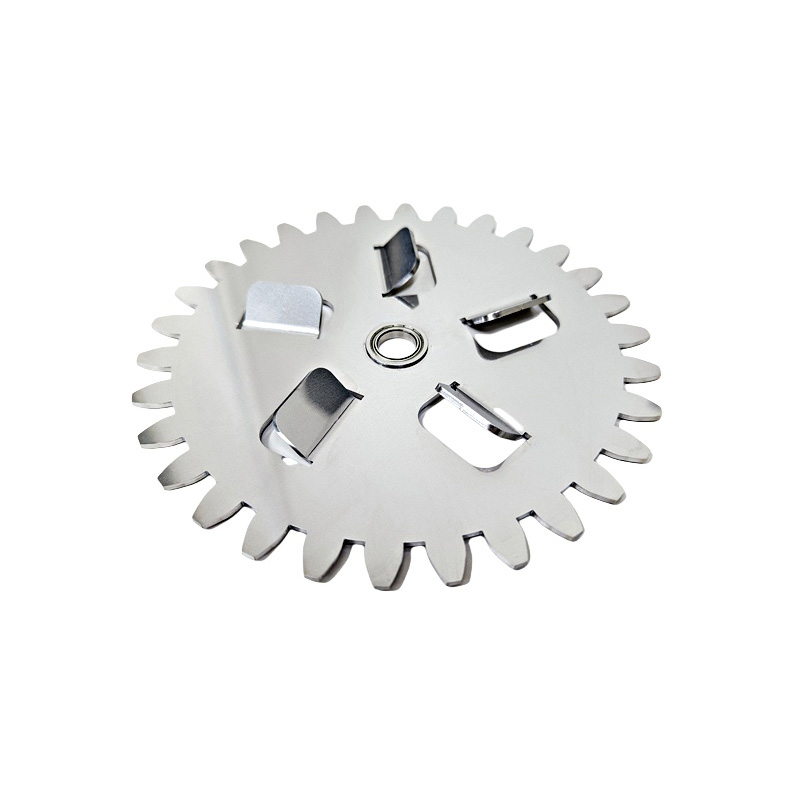
For example, Huapusheng manufactures precision custom stainless steel gear components using laser cutting and CNC bending. Available materials include SS304, SS316L, and SS430, with listed thicknesses from 1.5mm to 3.0mm for this product configuration.
Material selection affects more than the initial manufacturing cost. It also influences inspection frequency, maintenance expenses, replacement intervals, and equipment downtime.
Stainless steel components rely on their alloy composition and passive surface layer for corrosion protection. Unlike painted materials, their corrosion resistance does not depend entirely on an external coating remaining intact.
Aluminum can also provide long-term durability, but certain applications require anodizing, painting, or other protective treatments. Surface damage and unsuitable chemical exposure can reduce the effectiveness of these treatments.
For industrial buyers, total cost of ownership should include material prices, fabrication costs, protective treatments, maintenance, and expected service life. Stainless steel may have a higher initial purchase price, but it can be economically advantageous when equipment operates in demanding environments or component replacement is expensive.
Industrial facilities often expose metal components to cleaning agents, process chemicals, humidity, and changing temperatures. Stainless steel is widely used in food processing, pharmaceutical equipment, energy systems, and industrial automation because suitable grades combine corrosion resistance with mechanical strength.
SS304 is commonly selected for general industrial applications, while SS316L is often preferred when additional resistance to chlorides and certain chemical environments is required. SS430 provides another option for applications where its specific corrosion and mechanical properties are suitable.
However, no stainless steel grade is resistant to every chemical. Material selection should consider chemical concentration, temperature, exposure duration, and cleaning procedures.
The best material depends on the application's performance requirements. Stainless steel is often preferred for corrosion resistance and structural rigidity, while aluminum is attractive when weight reduction and thermal conductivity are priorities.
| Comparison | Stainless Steel | Aluminum |
|---|---|---|
| Corrosion resistance | Excellent with suitable grades | Good with suitable alloys |
| Saltwater resistance | 316L offers improved chloride resistance | Marine-grade alloys can perform well |
| Mechanical stiffness | Higher | Lower |
| Weight | Heavier | Much lighter |
| Thermal conductivity | Relatively low | High |
| Typical applications | Marine components, industrial enclosures | Lightweight housings, heat sinks |
For demanding corrosive environments, stainless steel is often the preferred option when durability and structural performance are priorities. Aluminum remains a practical alternative for applications where weight and heat dissipation are more important.
Choosing the correct stainless steel grade is only part of the manufacturing process. Welding contamination, embedded iron particles, rough surfaces, and poorly designed joints can reduce corrosion resistance.
Professional fabrication should include accurate laser cutting, controlled CNC bending, appropriate welding procedures, and suitable surface finishing. These processes help ensure dimensional accuracy and consistent component quality.
Xiamen Huapusheng Sheet Metal Manufacturing Co., Ltd. provides integrated sheet metal fabrication services, including laser cutting, CNC punching, bending, robotic welding, hardware insertion, and assembly. Its manufacturing capabilities support stainless steel materials such as SS304, SS316L, and SS430.
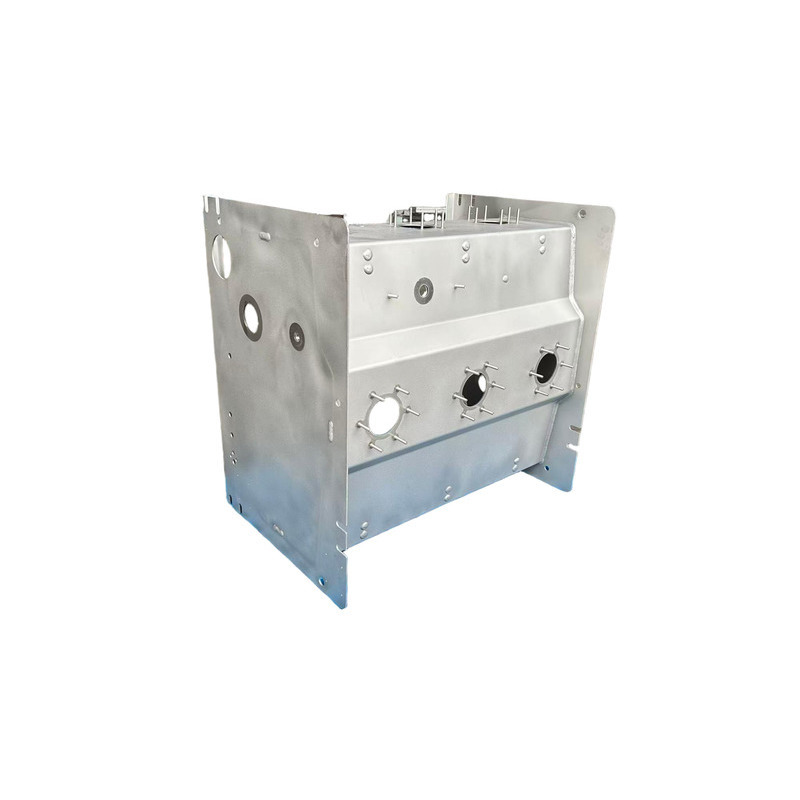
For OEM manufacturers requiring protective housings, the company also provides custom stainless steel electrical enclosure fabrication. These solutions can be developed according to customer drawings, dimensional requirements, material specifications, and application conditions.
Working with an experienced fabrication partner helps manufacturers achieve a better balance between corrosion resistance, structural performance, and production efficiency.
Before ordering custom stainless steel products, engineers and purchasing teams should confirm several important specifications:
Providing accurate engineering drawings and application details allows manufacturers to evaluate production feasibility and recommend suitable material options.
What are the main advantages of stainless steel over aluminum in corrosive environments?
Stainless steel offers strong corrosion resistance, better resistance to chloride-induced pitting with suitable grades, higher structural stiffness, and long-term durability. Grade 316L is particularly useful in many salt-exposed industrial applications.
Is stainless steel more corrosion-resistant than aluminum?
It depends on the alloy and environment. Suitable stainless steel grades generally perform better against localized chloride corrosion than many common aluminum alloys, but marine-grade aluminum can also provide excellent corrosion resistance in appropriate applications.
Is SS316L better than SS304 for marine applications?
Generally, yes. SS316L contains molybdenum, which improves resistance to chloride-induced pitting and crevice corrosion compared with SS304. However, severe seawater exposure may require more specialized materials.
Does stainless steel rust in saltwater?
Yes. Stainless steel can develop localized corrosion under severe chloride exposure, particularly in stagnant water and poorly designed crevices. Correct material selection, surface finishing, and maintenance are important.
Why is stainless steel more expensive than aluminum?
Stainless steel generally has higher raw material costs and can require more demanding fabrication processes. However, its durability and lower maintenance requirements may offset the initial investment in demanding environments.
Can stainless steel and aluminum be used together?
Yes, but direct electrical contact in the presence of moisture or another electrolyte can cause galvanic corrosion. Aluminum is generally more vulnerable in this combination. Insulating materials and suitable joint design can reduce the risk.
Which stainless steel grade is best for industrial components?
SS304 is suitable for many general industrial applications, SS316L is often preferred for chloride-exposed environments, and SS430 can be used where its specific mechanical and corrosion properties meet the design requirements.
Does Huapusheng manufacture customized stainless steel components?
Yes. Xiamen Huapusheng Sheet Metal Manufacturing Co., Ltd. provides customized stainless steel fabrication using SS304, SS316L, and SS430, with laser cutting, CNC bending, welding, finishing, and assembly capabilities.
How can I get a quotation for custom stainless steel products?
Prepare your engineering drawings, material grade, thickness, surface finish, order quantity, and application details. Contact Huapusheng to discuss manufacturing feasibility and request a project-specific quotation.
Looking for reliable stainless steel components for corrosive industrial environments?
Contact Xiamen Huapusheng Sheet Metal Manufacturing Co., Ltd. to discuss your material requirements, engineering drawings, and custom fabrication project.
 Get a Quote Now


 IPv6 Network Supported
Leave A Message
Scan to Wechat :

Scan to Whatsapp :

Hi! Click one of our members below to chat on

 English
 Français
 Deutsch
 Русский
 Italiano
 Español
 Nederland
 日语
 한국어
 Svenska