

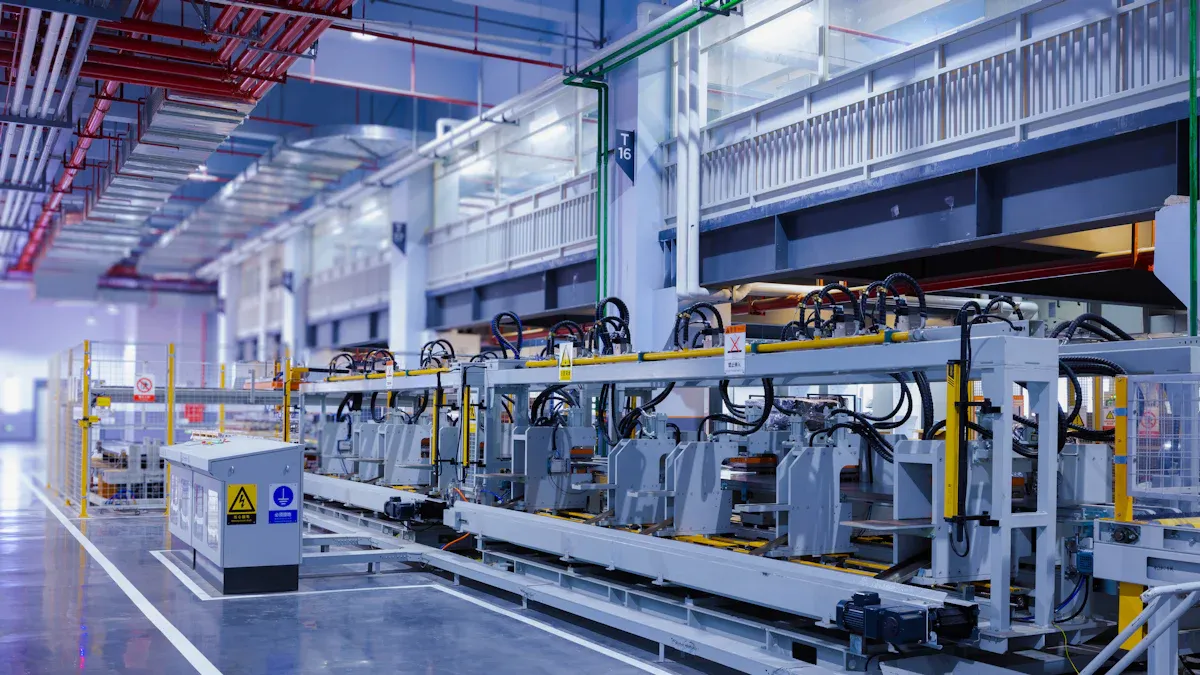
You rely on stainless steel to boost productivity and enhance safety in modern industries. Stainless steel stands out for its corrosion resistance, hygiene, and heat resistance, which matter greatly in environments like food processing and medical equipment manufacturing. The construction sector uses stainless steel more than any other, followed by automotive and industrial equipment. Stainless steel products deliver durability and reliability for critical applications. You see its non-porous surface reduce infection risks in medical tools and its strength improve structural safety. When you select stainless materials, you prioritize performance and long-term value.
Stainless steel offers high corrosion resistance, making it ideal for industry and medical industries.
Its durability and strength improve safety in construction and automotive applications.
Different grades of stainless steel suit specific needs, like high temperatures or marine environments.
Stainless steel's non-porous surface helps maintain hygiene and prevents bacterial growth.
Despite higher initial costs, stainless steel provides long-term value through reduced maintenance.
You depend on stainless steel for its versatility across industrial sectors. Stainless steel serves as a foundation for hygiene, durability, and safety. You see its impact in food production, kitchenware, medical instruments, gas connections, and water distribution. Each application area relies on stainless for specific functional roles that drive operational efficiency and product reliability.
|
Application Area |
Functional Role |
|---|---|
|
Food Production |
Essential for hygiene and durability; prevents bacterial growth and is easy to sanitize. |
|
Kitchenware |
Non-reactive, durable, and ensures even cooking; hygienic and easy to clean. |
|
Medical Instruments |
Provides sterilization and corrosion resistance, crucial for maintaining hygiene in medical settings. |
|
Gas Connections |
Flexible and lightweight, reducing leaks; corrosion-resistant for longevity in challenging environments. |
|
Water Distribution |
Maintains water quality, prevents harmful leaching, and ensures efficient flow with minimal maintenance. |
You select stainless steel because it maintains hygiene standards and reduces contamination risks. In medical and food processing environments, you prioritize materials that resist corrosion and withstand frequent cleaning. Stainless steel grades offer you flexibility in design and manufacturing, supporting both structural and sanitary requirements.
When you evaluate stainless steel, you focus on performance attributes that ensure long-term value. You require materials that resist corrosion, deliver high strength, and maintain hygiene. Stainless steel forms a protective chromium oxide layer, which prevents rust and oxidation. You benefit from its durability under mechanical stress and temperature fluctuations.
|
Attribute |
Description |
|---|---|
|
Corrosion Resistance |
Stainless steel forms a protective chromium oxide layer, preventing rust and oxidation. |
|
High Strength |
Certain grades possess high tensile and yield strength, suitable for structural applications. |
|
Durability |
Maintains integrity under various temperatures, pressures, and mechanical stresses. |
|
Hygienic Properties |
Features a smooth, non-porous surface that inhibits bacterial growth, ideal for sanitary environments. |
Tip: You improve operational safety and reduce maintenance costs by choosing stainless steel with high corrosion resistance and durability.
You also consider mechanical properties like strength, ductility, and toughness. Grades such as 316 and 316L excel in marine and chemical environments due to their superior corrosion resistance. For high-temperature applications, you rely on grades like 310 and 446, which retain their integrity under extreme heat. You match the stainless steel grade to your operating environment, factoring in pH, stress, and temperature.
You encounter a range of stainless steel grades, each tailored for specific industrial needs. The most common grades—304, 316, and 301—offer you a balance of corrosion resistance, mechanical strength, and manufacturability. You select high-quality stainless steel for demanding applications where hygiene and performance are critical.
|
Steel Grade |
EN Number Designation |
Name Designation |
Corrosion Resistance |
Mechanical Characteristic |
Forgeability |
Weldability |
Machinability |
|---|---|---|---|---|---|---|---|
|
AISI 304 |
1.4301 |
X5CrNi-18-10 |
good |
medium |
good |
very good |
medium |
|
AISI 316 |
1.4401 |
X5CrNiMo17-12-2 |
very good |
medium |
good |
medium |
medium |
|
AISI 301 |
1.4310 |
X10CrNi-18-8 |
good |
medium |
good |
very good |
medium |
316 stainless steel gives you an advantage in ultimate tensile strength, enhancing durability under sustained loading.
304 stainless steel offers higher yield strength, helping you resist deformation at lower stress levels.
316 is marginally harder than 304, improving wear resistance in abrasive environments.
The 440 series, especially 440C, provides high hardness and strength after heat treatment, making it ideal for cutlery and surgical instruments.
440C approaches the corrosion resistance of 304 in certain applications, though it is less suited for high-temperature or highly corrosive environments.
You prioritize stainless steel grades based on your project requirements. You weigh factors such as machinability, weldability, and forgeability to optimize manufacturing processes. You ensure that your material selection aligns with hygiene standards, corrosion resistance, and mechanical performance.
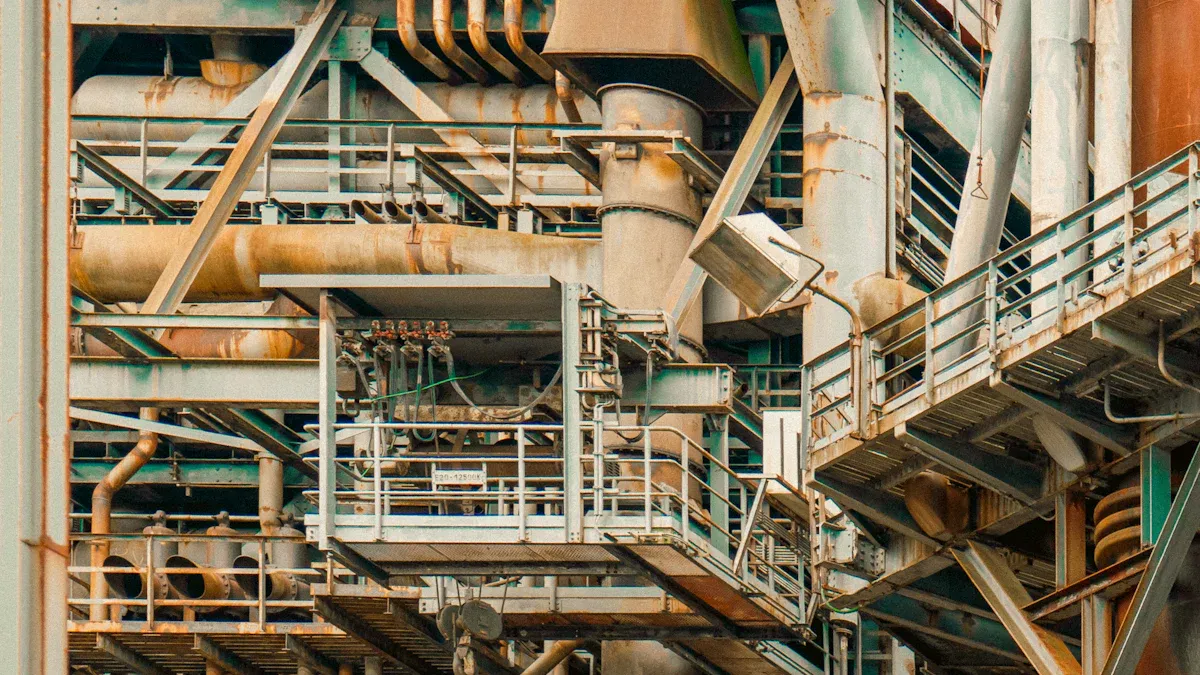
You rely on stainless steel to meet the strict hygiene and durability standards in food and beverage processing. Stainless steel applications in this sector include machinery frames, mixing tanks, conveyors, piping systems, and commercial kitchen worktops. These products ensure structural integrity and easy cleaning, which are essential for food safety regulations.
|
Application Type |
Description |
|---|---|
|
Food processing machinery frames and covers |
Essential for structural integrity and hygiene. |
|
Mixing tanks, hoppers, and feeders |
Used for safe handling of food materials. |
|
Conveyors and chutes in wash-down zones |
Designed for easy cleaning and maintenance. |
|
Dairy, beverage, and brewery piping systems |
Critical for preventing contamination. |
|
Commercial kitchen worktops and sinks |
Provides a hygienic surface for food preparation. |
Stainless steel’s corrosion resistance prevents food contamination and equipment degradation. Its smooth, non-porous surface inhibits bacterial growth and allows for effective sterilization. You benefit from compliance with FDA and EFSA standards, ensuring your operations meet global food safety regulations. Grades like 304 and 316 are common due to their excellent corrosion resistance and ease of fabrication, making them ideal for kitchenware and kitchen environments.
Note: Stainless steel withstands high temperatures and frequent cleaning, supporting long-term performance in demanding food processing environments.
In medical and pharmaceutical industries, you select stainless steel for its biocompatibility, corrosion resistance, and ability to maintain hygiene. Stainless steel applications include surgical instruments, orthopedic instruments, medical tools and devices, and dental equipment. You often choose grades such as 316L for orthopedic implants due to its high strength and fatigue resistance. For surgical instruments, 440C and 17-4PH provide the necessary hardness and wear resistance.
|
Stainless Steel Grade |
Application |
Key Properties |
|---|---|---|
|
316L |
Orthopedic Implants |
High strength, fatigue resistance, biocompatibility |
|
440C |
Surgical Instruments |
High hardness, wear resistance after heat treatment |
|
17-4PH |
Precision Tools |
High hardness, wear resistance after heat treatment |
You value stainless steel for its ability to withstand repeated sterilization cycles and resist corrosion from harsh cleaning agents. The material’s smooth surface prevents bacterial growth, supporting strict hygiene protocols. Stainless steel components in medical tools and devices ensure patient safety and regulatory compliance.
Construction and Architecture
You see stainless steel as a cornerstone in modern construction and architecture. Its applications range from cladding, structural supports, and reinforcement bars to handrails, roofing, and decorative facades. Grades 304 and 316 are preferred for exterior use due to their durability against weather exposure.
Cladding and facades enhance both durability and aesthetic appeal.
Structural beams and columns provide stability in large buildings.
Handrails and balustrades ensure safety and maintain appearance.
Roofing and drainage systems resist corrosion and extreme weather.
Fasteners and connectors secure structural components reliably.
Expansion joints and fittings handle movement and temperature variations.
Custom stainless steel gear components (produced by precision laser cutting) are used in movable building elements, such as retractable roofs or automated shading systems.
Laser welded stainless steel air chamber boxes serve as lightweight, airtight enclosures for ventilation, pressure management, or integrated facade systems.
Bridges and monuments require long-term durability and low maintenance.
Stainless steel’s self-healing passive layer maintains its appearance over time. You benefit from a wide range of finishes, from mirror polish to brushed textures, allowing you to achieve both functional and visual goals. The material’s long service life, often exceeding 80 years, and minimal maintenance requirements make it a sustainable choice for high-profile projects.
You depend on stainless steel for its strength, corrosion resistance, and ability to withstand harsh conditions in automotive manufacturing. Stainless steel applications include bus bodies, truck frames, exhaust systems, brake and fuel lines, and decorative trims.
Exhaust systems benefit from anti-corrosion and heat resistance.
Brake and fuel lines use hard, corrosion-resistant steel to prevent leakage and ensure safety.
Structural components absorb impact energy, enhancing crash protection.
Fasteners and engine parts resist high temperatures and chemical attacks.
Decorative trims offer a sleek finish with long-lasting resilience.
Stainless steel improves vehicle safety and longevity. You select it for high strength applications, especially in areas exposed to road salts, moisture, and extreme temperatures. Its durability reduces maintenance costs and extends the lifespan of automotive products.
In the oil and gas industry, you face some of the harshest operating environments. Stainless steel applications include separators, pumps, flow lines, piping, heat exchangers, storage tanks, process vessels, oil and gas coolers, coastal and harbor components, ship propellers, and stainless steel pipelines.
Stainless steel’s composition, with at least 10.5% chromium, forms a passive chromium oxide layer that prevents corrosion. This property is critical for resisting constant exposure to corrosive materials, stress corrosion cracking, and galvanic corrosion. You rely on corrosion-resistant steel to ensure the integrity and safety of oil and gas extraction, processing, and transportation systems.
Tip: Stainless steel’s ability to withstand high pressure, temperature fluctuations, and aggressive chemicals makes it indispensable in the oil and gas industry.
You trust stainless steel to deliver reliability and performance in aerospace engineering and commercial aerospace manufacturing. Stainless steel applications include aircraft fasteners, structural support components, landing gear hardware, hydraulic system parts, and ground support equipment.
|
Application Type |
Description |
|---|---|
|
Aircraft fasteners |
Specialized bolts, screws, rivets, and pins that join aircraft components. |
|
Structural support components |
Brackets, beams, and other pieces that reinforce an aircraft’s frame and maintain its structure. |
|
Landing gear hardware |
Fittings, pins, structural connectors, and other components used during takeoff, landing, and taxiing. |
|
Hydraulic system parts |
Valves, fittings, and tubes that control pressure in brakes and flight controls. |
|
Ground support equipment |
Tools and machinery used to service, maintain, and transport aircrafts on the ground. |
You often select precipitation-hardened grades like 17-4PH and 15-5H, as well as austenitic grades such as 304 and 316, for their strength and corrosion resistance. Stainless steel components withstand high-stress environments, resist corrosion, and maintain properties under extreme temperatures. These qualities are essential for the safety and efficiency of commercial aerospace operations.
You utilize stainless steel in energy and power generation for its ability to endure extreme conditions. Stainless steel applications include nuclear reactor pressure tubes, steam generators, containment vessels, and high-temperature piping. The material’s corrosion resistance and durability are vital for reactor safety and efficiency.
Stainless steel is crucial in nuclear reactors, where it withstands high temperatures and radiation.
Pressure tubes and steam generators rely on its strength and resistance to corrosion.
Containment vessels ensure the safe operation of nuclear facilities.
For high-temperature power generation, you often choose grade 321, which performs reliably up to 1652˚F (900˚C) due to its high strength, scaling resistance, and phase stability. Stainless steel’s long-term performance in these demanding environments supports the reliability of energy infrastructure.
You encounter stainless steel in a wide range of consumer goods, from kitchenware and food preparation tools to self-service machines and display racks. Stainless steel applications in this sector include cutlery, pots, pans, hot water lines, bulk storage, cake stands, dispensers, and vending machines.
Corrosion resistance ensures products remain stain-free and durable.
High strength-to-weight performance supports robust yet lightweight designs.
Thermal stability and hygienic surfaces make stainless steel ideal for kitchenware and appliances.
Aesthetic versatility provides a consistent, attractive finish over time.
|
Benefit |
Description |
|---|---|
|
Corrosion Resistance |
Stainless steel is selected for its ability to resist stains and corrosion. |
|
Durability |
It offers high resistance to dents and scratches compared to softer metals. |
|
Easy Cleaning |
The material is easy to clean, making it ideal for household appliances. |
|
Aesthetic Versatility |
Stainless steel provides a consistent finish over time, enhancing design appeal. |
You value stainless steel for its long-term cost savings, ease of cleaning, and ability to maintain a hygienic environment in kitchen environments. Its versatility in fabrication allows you to create innovative products that meet both functional and design requirements.
You often need a clear comparison when selecting materials for your projects. The table below gives you a concise overview of how stainless steel supports different industries. You can quickly match each industry with typical applications, the main benefits, and the most common stainless steel grades.
|
Industry |
Typical Applications |
Key Benefits |
Common Grades |
|---|---|---|---|
|
Food & Beverage |
Processing equipment, tanks, piping, kitchen surfaces |
Hygiene, corrosion resistance, easy cleaning |
304, 316 |
|
Medical & Pharmaceutical |
Surgical tools, implants, hospital fixtures |
Strong corrosion resistance, sterilization, biocompatibility |
304, 316, 316L, 440C |
|
Construction & Architecture |
Cladding, handrails, structural supports, roofing |
Durability, weather resistance, aesthetic appeal |
304, 316 |
|
Automotive |
Exhaust systems, brake lines, trims, fasteners |
Heat resistance, safety, longevity |
409, 430, 304 |
|
Oil & Gas |
Pipelines, pumps, valves, storage tanks |
Corrosion resistance, high pressure and temperature tolerance |
316, 304, Duplex |
|
Aerospace |
Fasteners, landing gear, hydraulic parts |
High strength, reliability, weight savings |
17-4PH, 15-5PH, 304 |
|
Energy & Power Generation |
Reactor tubes, steam generators, containment vessels |
Durability in high heat and stress environments |
321, 304, 316 |
|
Consumer Goods |
Cutlery, cookware, appliances, vending machines |
Easy cleaning, corrosion resistance, long-lasting finish |
304, 430 |
Tip: You can use this table as a quick reference when you need to compare stainless steel options for your next project. Matching the right grade to your application ensures you get the best performance and value.
You see that stainless steel adapts to a wide range of environments. For example, you use grade 304 in medical manufacturing for its strong corrosion resistance and ease of sterilization. In high-strength aerospace applications, you often select 17-4PH or 15-5PH for enhanced strength and dependable performance. In power generation, you rely on various grades to handle high heat and stress.
This overview helps you make informed decisions. You can quickly identify which stainless grades deliver the benefits you need, whether you prioritize hygiene, durability, or resistance to extreme conditions.
You often face higher upfront costs when you choose stainless steel for industrial projects. High-performing austenitic grades require expensive alloying elements such as chromium and nickel. These raw material prices fluctuate due to global market changes, mining disruptions, or export restrictions. Energy costs also impact production expenses, which can raise the final price of stainless steel products. For reference, stainless steel typically costs between $2,000 and $3,500 per metric ton. This is significantly higher than carbon steel or aluminum. However, you gain long-term value because corrosion-resistant materials reduce maintenance, downtime, and replacement costs. Life-cycle costing methods help you compare current and future expenses, making it easier to justify the initial investment.
High-performing grades have a higher upfront cost but deliver long-term benefits.
Corrosion resistance reduces maintenance and replacement costs.
Raw material and energy prices drive market fluctuations.
Stainless steel costs more than carbon steel and aluminum due to alloying and refining.
Note: You can offset higher initial costs by considering the total cost of ownership over the product’s lifespan.
You must consider several environmental and technical limitations when selecting stainless steel. The material’s high density adds weight, which limits its use in lightweight construction. Stainless steel can suffer from pitting corrosion in chloride-rich environments. Its poor thermal conductivity makes it less efficient for heat transfer applications. Machining can be challenging because of its hardness and work-hardening properties. You may also encounter dimensional changes due to thermal expansion. Improper fabrication or cleaning can lead to surface contamination, reducing corrosion resistance.
High cost from alloying elements.
Susceptibility to pitting corrosion in certain environments.
Difficult machinability and work-hardening.
Poor thermal conductivity.
Heavy weight and thermal expansion.
Risk of surface contamination with improper handling.
You have several alternatives to stainless steel, each with unique advantages and drawbacks. Carbon steel offers lower costs and easier machinability but lacks corrosion resistance. Aluminum provides a lightweight option with good corrosion resistance, though it has lower strength and durability. Titanium excels in strength-to-weight ratio and corrosion resistance but comes at a much higher price. Plastics and composites offer excellent corrosion resistance and low weight, but they cannot match the mechanical strength or temperature tolerance of stainless steel.
|
Material |
Performance |
Cost |
Technical Attributes |
|---|---|---|---|
|
Carbon Steel |
Moderate strength |
Low |
Poor corrosion resistance |
|
Aluminum |
Lightweight, moderate |
Moderate |
Good corrosion resistance, low strength |
|
Titanium |
High strength, corrosion resistant |
Very High |
Lightweight, difficult to machine |
|
Plastics/Composites |
Low strength, corrosion resistant |
Low-Moderate |
Lightweight, limited temperature tolerance |
Tip: You should evaluate your application’s requirements for strength, corrosion resistance, weight, and cost before selecting an alternative to stainless steel.
You need a clear process when evaluating stainless steel for your industrial project. This checklist helps you select the right products and grades for your application. Review each item to ensure you meet performance, compliance, and operational requirements.
Assess corrosion resistance. Identify the environment where you will use stainless steel. Check if the grade resists chemicals, moisture, or salt exposure.
Confirm mechanical properties. Review tensile strength, hardness, and toughness. Match these attributes to your project’s load and stress demands.
Verify hygiene and cleaning needs. Choose stainless grades with smooth, non-porous surfaces for applications requiring frequent cleaning or sterilization.
Request material certifications. Ask suppliers for documentation that proves compliance with industry standards. Material certifications guarantee quality and traceability.
Check compliance with ASTM and ISO standards. Ensure the stainless products meet recognized performance benchmarks. Standards help you avoid costly failures.
Evaluate weldability and machinability. Select grades that fit your fabrication process. Some grades work better for welding, bending, or machining.
Review cost and availability. Compare prices and lead times for different grades. Balance initial investment with long-term maintenance savings.
Consider aesthetic requirements. Choose finishes and textures that match your design goals. Stainless offers options from mirror polish to brushed surfaces.
Analyze environmental impact. Look for recyclable grades and sustainable sourcing. Stainless steel supports green manufacturing practices.
Tip: Use this checklist during procurement and project planning. You reduce risks and optimize performance by following a structured evaluation.
|
Criteria |
Why It Matters |
|---|---|
|
Corrosion Resistance |
Prevents equipment failure and contamination |
|
Mechanical Properties |
Ensures structural integrity and durability |
|
Hygiene & Cleaning |
Supports safety and regulatory compliance |
|
Material Certifications |
Confirms quality and industry compliance |
|
Standards Compliance |
Meets ASTM and ISO benchmarks |
|
Weldability & Machinability |
Fits fabrication and assembly requirements |
|
Cost & Availability |
Balances budget and project timeline |
|
Aesthetic Requirements |
Achieves desired appearance and branding |
|
Environmental Impact |
Promotes sustainability and recyclability |
You improve decision-making by using this checklist. You ensure your stainless steel selection aligns with your project’s technical, regulatory, and operational needs.
You gain significant benefits when you choose stainless steel for industrial applications. You see high corrosion resistance, easy cleaning, and strong durability. Stainless steel supports hygiene in food, medical, and chemical environments. You must consider cost and technical limits before making a decision. Review the checklist and overview table to match stainless grades with your project needs. You improve outcomes by aligning your material choice with industry requirements.
You benefit from stainless steel’s non-porous surface. This feature prevents bacteria buildup and simplifies cleaning. You meet strict hygiene standards in food, medical, and pharmaceutical industries by choosing the right grade.
You start by evaluating your environment. Consider corrosion risks, mechanical loads, and temperature extremes. Match these needs to grade properties. Request certifications to ensure compliance with industry standards.
You find that most austenitic grades, like 304 and 316, offer excellent weldability. Some martensitic and ferritic grades require special techniques. Always check the grade’s weldability before fabrication.
You gain strong resistance to many corrosive agents. However, you may encounter pitting in chloride-rich environments. For these conditions, you should select molybdenum-alloyed grades like 316.
You support sustainability by using stainless steel. Most grades contain recycled content and are fully recyclable. You reduce environmental impact and promote green manufacturing practices with your material choice.
 Get a Quote Now


 IPv6 Network Supported
Leave A Message
Scan to Wechat :

Scan to Whatsapp :

Hi! Click one of our members below to chat on

 English
 Français
 Deutsch
 Русский
 Italiano
 Español
 Nederland
 日语
日语 한국어
한국어 Svenska