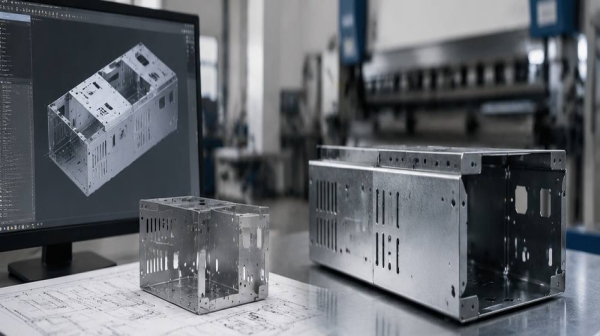
In the industrial hardware sector, the gap between a 3D CAD model and a physical, cost-effective product is bridged by Design for Manufacturability (DFM). A design that functions perfectly in simulation can often carry unnecessary manufacturing costs if it does not account for the physical behavior of metal during laser cutting, bending, and welding. Addressing these variables at the engineering stage prevents costly revisions and accelerates the time-to-market.
Optimizing a part for High Precision Metal Enclosure Fabrication is not about compromising the design intent; it is about aligning the geometric features of the part with the specific capabilities and tooling constraints of the factory floor. This document details the critical DFM principles that engineers must apply to shee...

 Get a Quote Now


 IPv6 Network Supported



 English
 Français
 Deutsch
 Русский
 Italiano
 Español
 Nederland
 日语
日语 한국어
한국어 Svenska