
Choosing the right metal fabrication provider is a critical strategic decision. A bad choice can delay timelines, inflate budgets, and compromise the quality of your final product. In fact, many custom fabrication projects experience delays.
The gap between an average supplier and a true strategic partner is stark. A partner's performance on key metrics is a clear indicator of their reliability.
| Partner Performance: Average vs. Strategic | |
| Metric | Average Supplier |
| First Pass Yield (FPY) | 90-95% |
| On-Time Delivery (OTD) | 85-95% |
| Dimensional Accuracy | ±0.1 mm (CNC precision) |
| Thickness Range | 1.0 mm – 3.0 mm (customizable) |
| Application System | Low voltage circuit breaker and power distribution cabinet |
| Service Offered | Custom sheet metal processing and assembly |
Quality control is the foundation for these results. Every project is different, and decision-makers must carefully consider what their project truly needs to find a partner who delivers this level of excellence.
Picking the right material is the first step. Steel is strong and durable, ideal for automotive parts and structural supports. Aluminum is lightweight and corrosion-resistant, perfect for aerospace and electronics. Copper is the standard for electrical conductivity.
The material you pick changes cost, performance, and finishing requirements. Stainless steel costs more but offers superior longevity in harsh environments. Aluminum is light but may require a specific surface treatment to improve hardness. Your design should incorporate best practices, such as reliefs to prevent bending problems and cut-outs to maintain strength around hardware.
Tip: The material you choose impacts price, aesthetics, and long-term maintenance requirements. A good partner can advise you on the best cost-to-performance ratio for your application.
How many parts you need matters. For high-volume production, you need a fabricator with the capacity and process control to ensure every part is identical. Complex designs with tight tolerances or intricate shapes require specialized tooling and highly skilled workers.
If your project requires difficult geometries or high-strength welds, you need experts and advanced machinery.
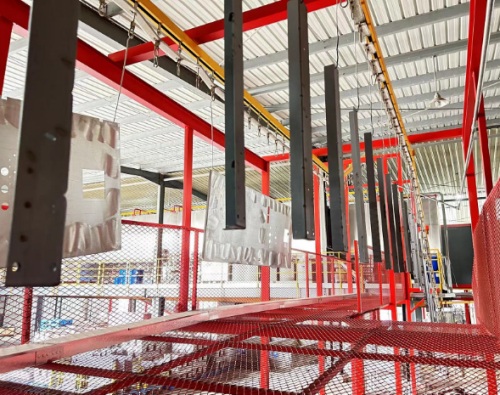
A great fabricator provides a one-stop solution. This includes in-house finishing services, which are critical for making parts last longer and look better. Look for a partner who offers:
Deburring, Grinding, and Painting
Polishing and Plating
Anodizing
Advanced Powder Coating (e.g., C4/C5 high-corrosion protection capabilities)
These finishing steps, especially when handled in-house, reduce lead times and ensure a consistent, high-quality final product.
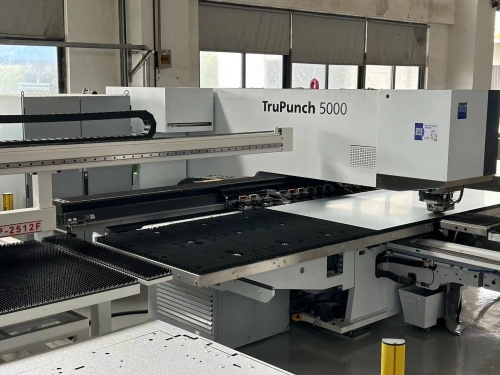
The best sheet metal fabricators use modern, high-precision machinery. This is non-negotiable for achieving a perfect fit. CNC machining centers, laser cutters, and robotic welders work faster and can produce complex shapes with exceptional accuracy.
When evaluating a partner, look for these specific, industry-leading technologies:
| Equipment/Technology | What to Look For (Key Features) |
| CNC Punching & Laser Cutting | Trumpf and Amada systems, demonstrating a commitment to precision (e.g., ±0.1mm) and high-speed processing (e.g., 12,000W laser power). |
| Press Brakes (Bending) | Trumpf and Amada press brakes with high tonnage (e.g., 230 tons) and length for handling large, complex components. |
| Robotic Welding | Yaskawa or Fanuc robots paired with high-end power sources like Fronius for consistent, high-strength welds. |
Fabricators with new, automated machinery make parts faster and with fewer errors. These smart tools are essential for maintaining quality and consistency across high-volume production runs.
A full-service fabricator (a "one-stop shop") does every step in one place. This has many advantages:
A single point of contact and accountability for the entire project.
Reduced costs by eliminating extra vendors, shipping, and markups.
Faster lead times because the provider controls the entire production schedule.
Consistent quality, as all steps from cutting to coating happen under one quality system.
Look for a partner with a large, self-owned facility (e.g., 30,000m²) who can handle your entire project in-house.
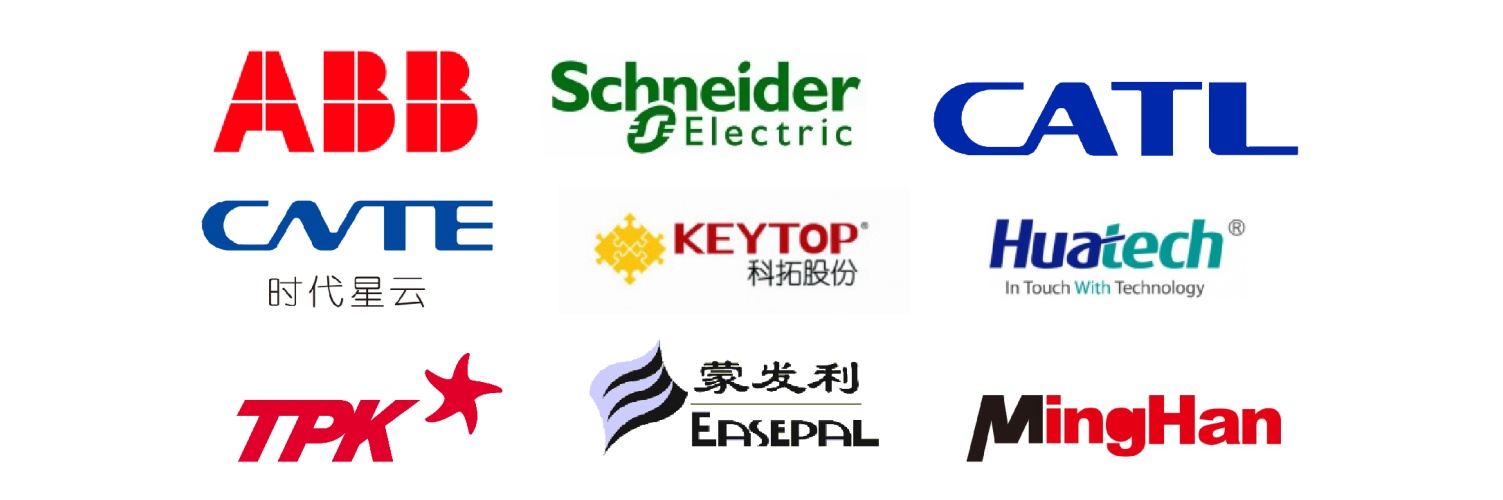
While years in business are important (we were founded in 2003), a proven track record with industry leaders is more telling. A supplier who is a certified partner for ABB, Schneider Electric, and CATL has already passed the most rigorous quality and reliability audits in the world. This proves they can handle complex projects and meet the highest standards.
Different industries have unique requirements.
Medical and Electronics industries require high precision and flawless cosmetic finishes.
Aerospace and Automotive industries demand extremely high-strength, lightweight parts and perfect traceability.
Power Control and Industrial sectors require robust fabrication, high-corrosion protection, and extreme reliability.
A fabricator with the right skills and experience knows what your industry needs and how to deliver the best results.
A strong fabricator uses a robust Quality Management System (QMS) to ensure consistency. These systems find problems early and make sure every part matches the plan.
Standardized Procedures: Ensures all drawings and processes are consistent.
Inspection Protocols: Uses advanced tools like 3D scanners and salt spray testers to verify dimensions and finish quality.
Continuous Improvement: A core principle to optimize work and save costs while maintaining quality.
Accreditations are the external proof of a fabricator's quality commitment.
ISO 9001:2015: This is the baseline, showing the company follows strict rules for quality and customer satisfaction.
IATF 16949:2016: This is the key differentiator. If a supplier holds this (the automotive industry's strict standard), it signals they operate at an elite level of process control and traceability.
ISO 14001 & ISO 45001: These show the partner is a responsible, stable, and sustainable business.
Tip: Picking a fabricator with an IATF 16949 certification helps ensure your project meets the highest possible quality standards, regardless of your industry.
A true partner invests in innovation. Ask if they have a dedicated R&D team and a portfolio of patents. A supplier with 36 R&D and technical personnel and 32 authorized patents is a problem-solver who can help you optimize your designs, not just a factory that cuts metal.
Reviews and testimonials are crucial. A good company should be transparent and provide references from happy customers. Look for positive testimonials that prove a company is trusted and does good work.
Reliability is key. A fabricator must deliver on time and keep promises. Good customer service means answering questions fast and fixing problems quickly. Strong communication helps you know what is happening at every stage.
A good sheet metal fabrication partner can handle jobs of any size. A partner with a 30,000m² self-owned facility and 200+ employees can confidently handle high-volume production runs without compromising lead times. They have the machine capacity and workforce to scale with your needs, from a single prototype to thousands of parts per week.
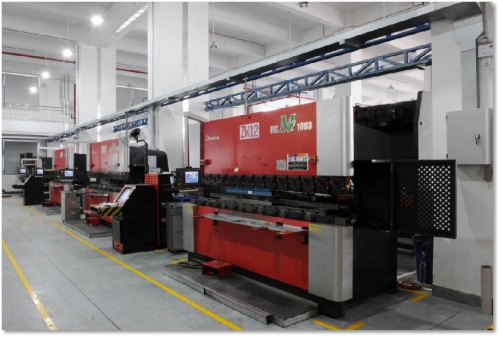
Facility Visits and Audits: Visit the facility. Look for cleanliness, organization, and well-maintained equipment. Ask to see their quality control lab and inspection processes.
Reference Checks: Talk to their past customers. Ask about on-time delivery, quality, and how problems were solved.
Evaluation Checklist: Use a checklist to compare partners fairly.
Do they have experience in your industry?
Is their equipment (Trumpf, Amada, Yaskawa) modern and well-maintained?
Are they IATF 16949 certified?
Do they have a dedicated R&D team?
Can they handle your full process, including C4/C5 powder coating?
Are their quality metrics (e.g., >99.8% OTD) documented and shared?
Picking the best sheet metal fabricator means looking at the total picture: their technology, their certified quality systems, their end-to-end capabilities, and their proven industry experience.
At Xiamen Huapusheng, we have built our operation on these pillars. We are not just a supplier; we are your strategic manufacturing partner, trusted by global leaders.
Ready to see the difference a strategic partner can make? Contact our engineering team today to discuss your project and receive a detailed quote.
 Get a Quote Now


 IPv6 Network Supported
Leave A Message
Scan to Wechat :

Scan to Whatsapp :

Hi! Click one of our members below to chat on

 English
 Français
 Deutsch
 Русский
 Italiano
 Español
 Nederland
 日语
日语 한국어
한국어 Svenska