

 English
 Français
 Deutsch
 Русский
 Italiano
 Español
 Nederland
 日语
日语 한국어
한국어 Svenska
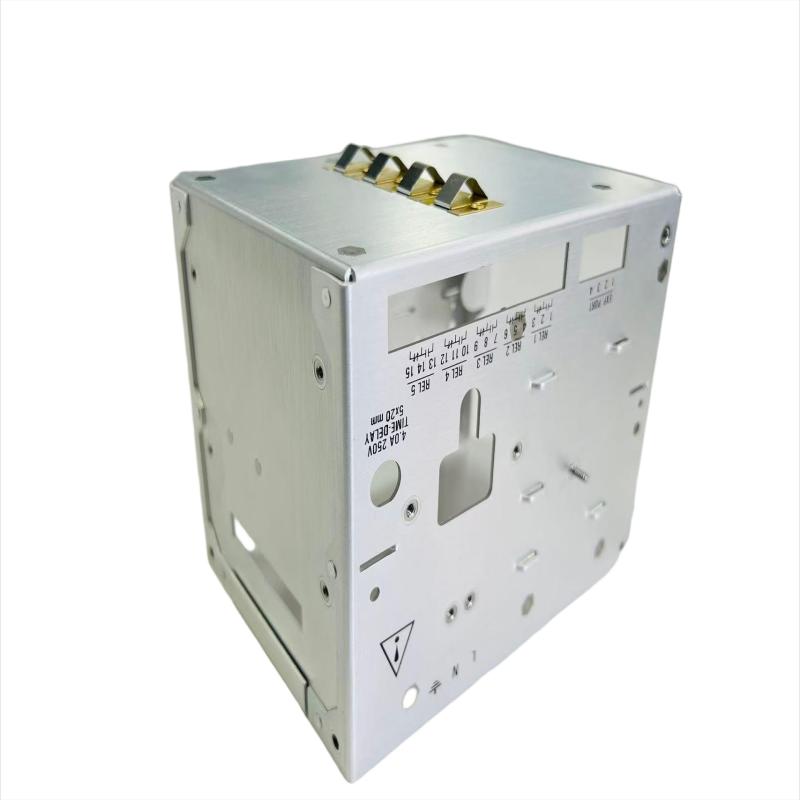
Engineers and procurement managers often face a critical crossroads early in the design phase: selecting the primary material for the chassis or housing. While carbon steel is the budget standard, the real debate for high-performance or harsh-environment applications typically narrows down to two contenders: Stainless Steel (304/316) and Aluminum (5052/6061).
Making the wrong choice doesn't just affect the Bill of Materials (BOM) cost; it impacts thermal management, electromagnetic interference (EMI) shielding, and the longevity of the equipment in the field. This guide breaks down the physical and economic trade-offs to help you specify the correct material for your next Custom Sheet Metal Fabrication project.
The Weight Factor: Strength-to-Weight Ratio
If your application is stationary—such as a floor-mounted control cabinet in a factory—weight might not be a primary concern. However, for rack-mounted equipment, portable devices, or aerospace applications, every kilogram counts.
Aluminum is approximately one-third the weight of steel.
- Density of Stainless Steel (304): ~0.29 lbs/in³ (8.0 g/cm³)
- Density of Aluminum (6061): ~0.098 lbs/in³ (2.7 g/cm³)
Despite being lighter, aluminum alloys like 5052 and 6061 offer impressive strength-to-weight ratios. While stainless steel is inherently stronger and harder, aluminum can often achieve the necessary structural rigidity by increasing the gauge (thickness) slightly without approaching the weight of a steel equivalent.
Environmental Resilience: Corrosion and Hygiene
This is where stainless steel earns its reputation. In environments with high humidity, salt spray, or chemical exposure, standard carbon steel fails without expensive plating.
The Case for Stainless Steel
For outdoor, marine, or food-processing environments, Stainless Steel Electrical Enclosures are the industry standard.
- Grade 304: Suitable for general outdoor use and washdown areas.
- Grade 316: Contains molybdenum, making it resistant to chlorides and saline environments (ideal for offshore or coastal installations).
Stainless steel does not require painting or powder coating to resist rust, although electropolishing is often used to reduce surface micro-crevices where bacteria can hide.
The Case for Aluminum
Aluminum naturally forms a protective oxide layer that prevents deep corrosion. However, in aggressive environments, this oxide layer can fail. To compete with stainless steel in durability, aluminum usually requires secondary finishes:
- Anodizing: Hardens the surface and adds corrosion resistance (and color).
- Chromate Conversion (Alodine): Maintains electrical conductivity while offering protection.
- Powder Coating: Provides a robust barrier layer.
If the enclosure will be scratched frequently or exposed to caustic cleaning agents, stainless steel remains the uncompromised winner.
Thermal Management: Dissipating the Heat
As electronics shrink and power densities rise, the enclosure itself often becomes part of the thermal management strategy. This is a decisive factor for power supplies, inverters, and high-performance computing chassis.
Refer to the thermal conductivity comparison below:
| Material | Thermal Conductivity (W/m-K) | Heat Dissipation Efficiency |
|---|---|---|
| Stainless Steel (304) | ~16.2 | Poor. Acts as a thermal insulator. |
| Carbon Steel | ~54 | Moderate. |
| Aluminum (6061) | ~167 | Excellent. Acts as a heat sink. |
If your internal components generate significant heat, an aluminum enclosure acts as a passive heat sink, transferring thermal energy from the inside to the outside air. Using stainless steel in high-heat applications often necessitates adding active cooling (fans or A/C units), which introduces failure points and maintenance costs.
This thermal property is why you will almost exclusively see Anodized Aluminum Power Supply Enclosures in the market. The chassis itself helps keep the MOSFETs and transformers cool.
Electrical Conductivity and Shielding
For applications sensitive to Electromagnetic Interference (EMI) or Radio Frequency Interference (RFI), the electrical conductivity of the enclosure material is paramount.
Aluminum is an excellent electrical conductor. Stainless steel is a relatively poor conductor. For an enclosure to act as a Faraday cage, the material needs low resistance. While stainless steel can shield, aluminum is significantly more efficient at attenuating high-frequency noise.
- Grounding: Aluminum chassis provide easy, low-resistance grounding points. Stainless steel requires specific masking during finishing or the use of welded studs to ensure a proper ground path, as its surface resistance is higher.
Cost Analysis: Raw Material vs. Processing
The price per pound of raw material is misleading. While aluminum is generally more expensive per kilogram than stainless steel, you use less of it by weight. However, the real cost driver in custom manufacturing is usually processing time.
Welding and Fabrication
- Stainless Steel: Harder to cut and bend. It causes faster wear on punch press tooling and laser cutter consumables. However, it is generally easier to weld than aluminum for many shops.
- Aluminum: Softer and faster to cut. However, welding aluminum (TIG or MIG) requires higher skill levels and precise heat control to avoid warping or burn-through.
Finishing Costs
This is the hidden equalizer.
- Stainless Steel: Often requires no finish (just graining/brushing).
- Aluminum: Almost always requires anodizing, alodine, or powder coating for aesthetics and durability.
Cost Comparison Scenario:
| Feature | Stainless Steel Enclosure | Aluminum Enclosure |
|---|---|---|
| Raw Material Cost | Moderate | High |
| Machining/Cutting | Slow (Higher Cost) | Fast (Lower Cost) |
| Welding Labor | Standard | Specialized (Higher Cost) |
| Finishing Required? | No (Usually) | Yes (Anodize/Paint) |
For simple folded parts without welding, aluminum can sometimes be cheaper due to ease of machining. For complex welded assemblies, stainless steel often wins on labor costs.
Decision Matrix: Which Material Fits Your Project?
To simplify the selection process for your RFQ (Request for Quote), use the following guide based on primary operational requirements.
Select Stainless Steel (304/316) if:
- The environment involves saltwater, acids, or strict hygiene requirements (medical/food).
- The unit will be subject to high-pressure washdowns (IP65/IP66 rated).
- High impact strength and dent resistance are required.
- Paint or powder coating is not desired due to the risk of chipping.
- Weight is not a constraint.
Select Aluminum (5052/6061) if:
- Weight reduction is critical (mobile units, avionics, handhelds).
- Heat dissipation is a priority (power electronics, CPUs).
- The enclosure requires extensive machining (tapped holes, complex cutouts) where steel would wear out tools.
- You need high-level EMI/RFI shielding without complex plating.
- Aesthetic anodized finishes are required for branding.
Specifying for Manufacturing
When you are ready to send your drawings to a fabrication partner, clarity is key to avoiding production delays.
- Specify the Alloy: Don’t just say "Aluminum." Specify 5052-H32 for sheet metal bending (it bends without cracking) or 6061-T6 for machined structural parts. For Stainless, specify 304 for standard use or 316 for marine use.
- Define the Finish: If choosing aluminum, specify the anodize type (Type II for color, Type III for hardness) and whether the inside needs masking for electrical grounding.
- Weld Requirements: Clearly indicate if welds should be ground smooth (a seamless look) or left "as welded" (industrial look, lower cost).
Choosing the right material is rarely about finding a perfect material, but rather finding the right balance of trade-offs for your specific application. By weighing the thermal needs against environmental exposure and budget, you can ensure your enclosure performs as reliably as the technology inside it.



 IPv6 Network Supported