Leave A Message
If you are interested in our products and want to know more details,please leave a message here,we will reply you as soon as we can.
Submit
banner

Blog

Home

Blog

  • What Are Industrial Metal Enclosures and Why Are They Critical for Modern Industries?
    Oct 21, 2026
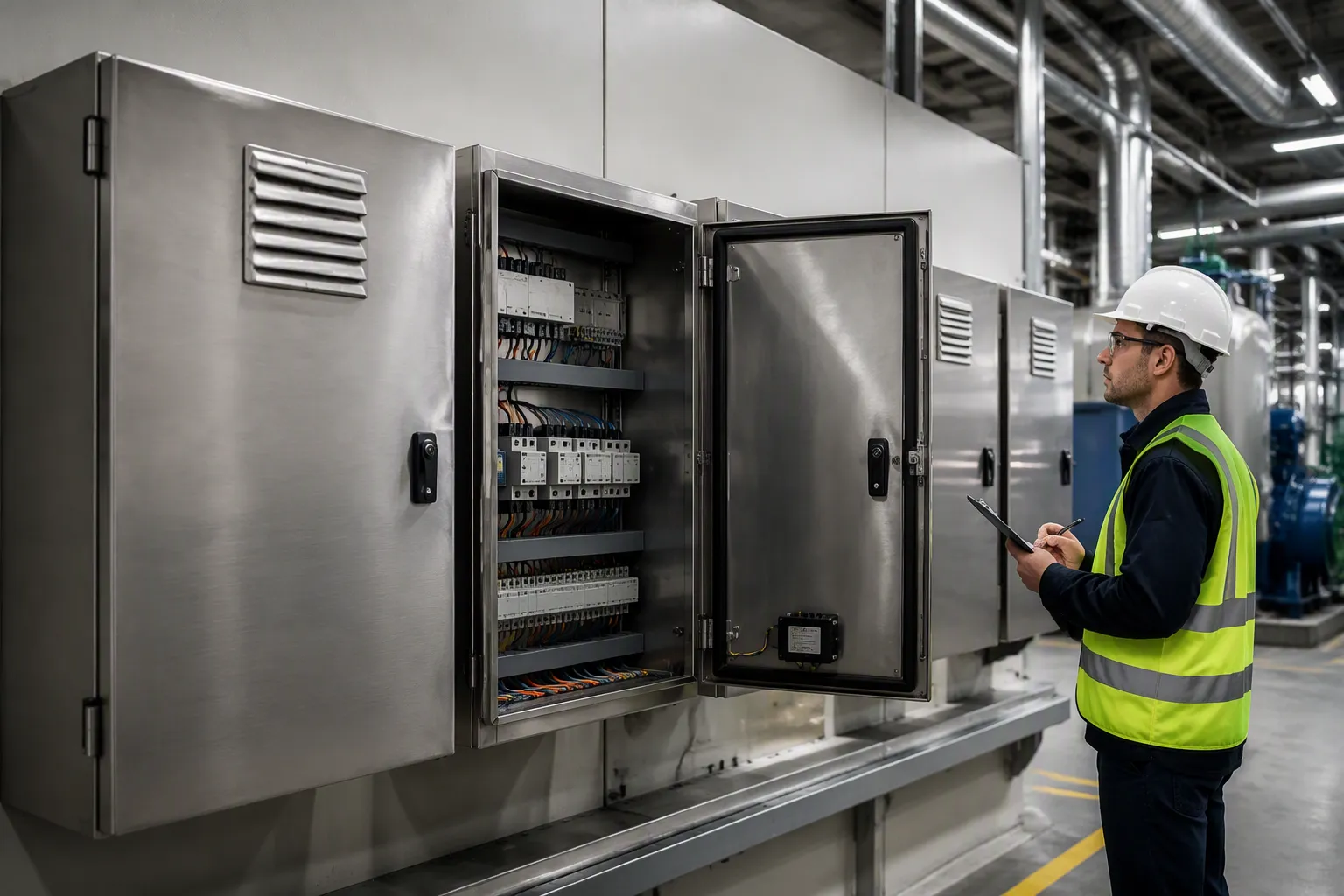
      Industrial metal enclosures are precision-engineered metal housings. They protect electrical, electronic, and mechanical equipment from moisture, dust, impact, and interference. These enclosures are critical because they protect equipment, safeguard workers, extend asset life, and ensure regulatory compliance. Without them, modern industrial operations would face frequent failures, safety hazards, and costly downtime. HPS designs and manufactures industrial metal enclosures built for durability, customization, and performance in the most demanding environments.   Key Takeaways Industrial metal enclosures protect sensitive electronics from interference and physical damage. These enclosures keep workers safe by blocking contact with live electrical parts. Strong enclosures...

  • How Sheet Metal Fabrication Works: From CAD Design to Final Assembly
    Oct 20, 2026
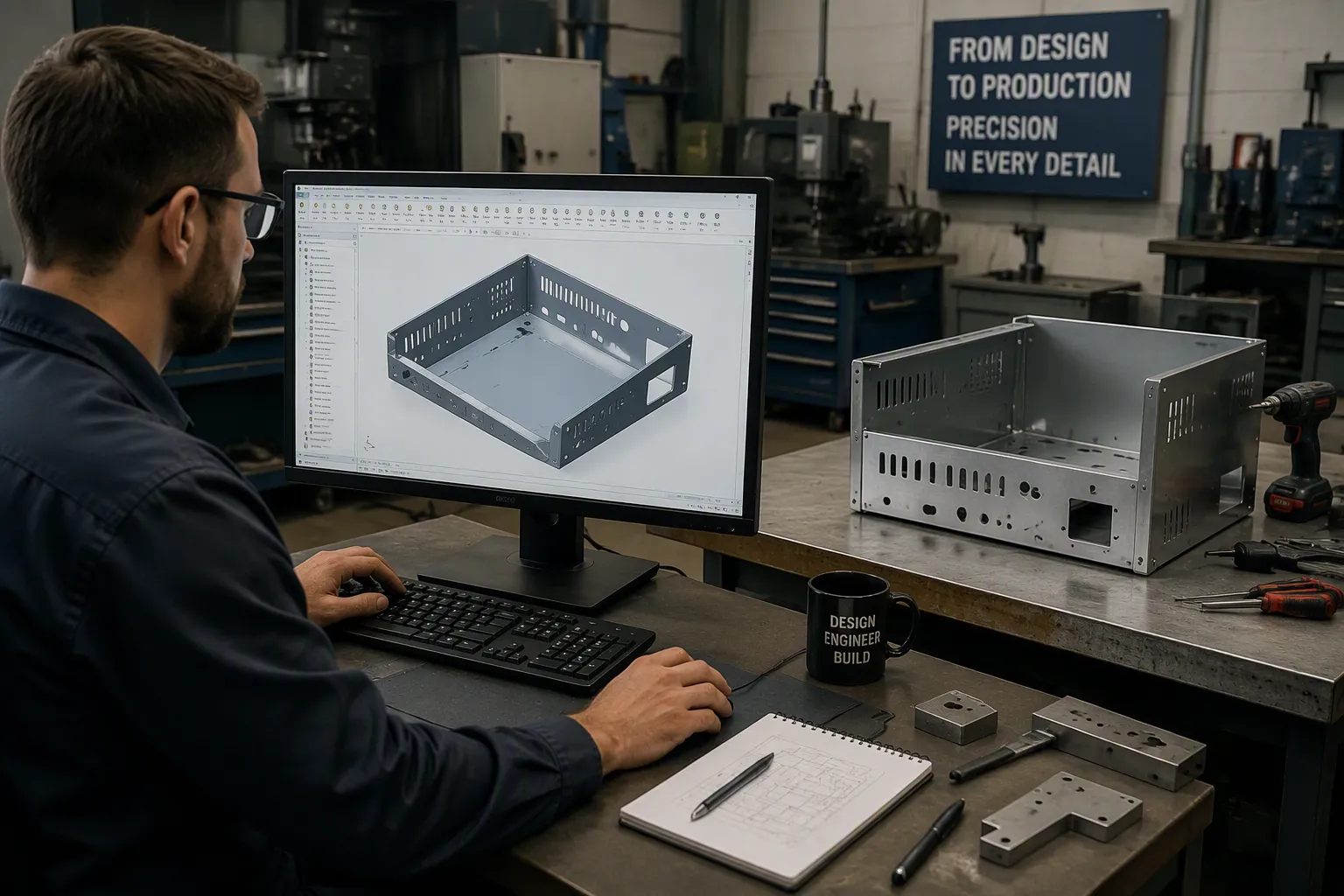
      The sheet metal fabrication process transforms flat metal stock into precise, durable parts through cutting, forming, joining, and finishing steps. Your path from a CAD model to a finished assembly directly determines part accuracy, production cost, lead time, and overall quality. HPS manages this entire path in-house, giving you a single point of accountability from digital design through final assembly.   Key Takeaways Early design feedback saves time and money by catching problems before production. CAD models and simulations help you create accurate parts without wasting materials. A single partner for design, fabrication, and assembly ensures quality and speeds up your project.   The Sheet Metal Fabrication Process: From CAD to Production-Ready Design  ...
  • How Screen Printing Works on Sheet Metal Parts
    Oct 19, 2026
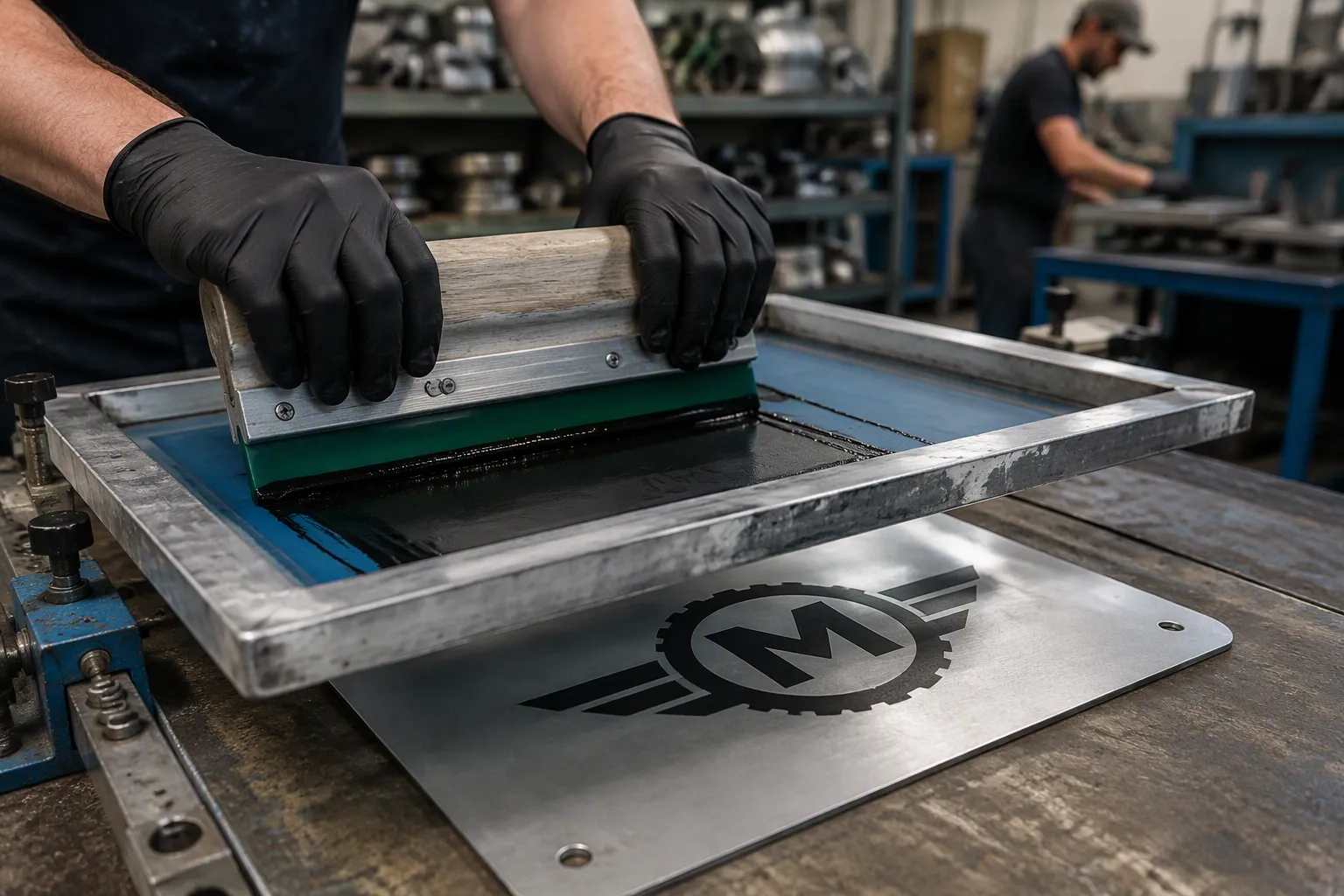
      Screen printing, also called silk-screening, presses ink through a porous mesh stencil onto a metal surface. Sheet Metal Finishing Screen Printing follows three steps: you prepare the surface, press ink onto a material through the screen, then heat-cure the ink. The silk-screening process requires solvent-based inks because metal is nonporous, and heat curing bonds the ink for long-lasting results. Silk screen printing on metal and silk screen printing on metals both rely on this durable method.   Key Takeaways   Clean the metal surface first to remove oils and dust so ink sticks well. Press ink through a mesh screen, then heat-cure it to bond permanently. Screen printing gives durable, vibrant marks ideal for large batches and outdoor use.   Sheet Metal Fini...
  • China Sheet Metal Fabrication Manufacturer Guide: What OEM Buyers Need to Know in 2026
    Oct 20, 2026
      You select a China Sheet Metal Fabrication partner by verifying process capability, including precise Sheet Metal Finishing Screen Printing, quality certifications, engineering support, and communication before you discuss price. A wrong choice costs you rework, tooling loss, delays, and IP risks. In 2026, rising domestic demand and stricter quality expectations demand extra diligence. An OEM-grade factory owns its processes and engineers; a trading company does not. Key Takeaways Check the factory's equipment and certifications first. This step ensures they can meet your quality needs. Ask for design help early. This action reduces costly mistakes and saves time. Start with a small test order. This approach confirms the factory's abilities before you commit to a large produc...
  • How to Choose a Reliable Sheet Metal Enclosure Manufacturer in China
    Oct 15, 2026
      Choosing the wrong sheet metal enclosure manufacturer leads to cost overruns, quality defects, and missed deadlines. You can avoid these problems through disciplined evaluation of your requirements, supplier capabilities, quality systems, and pricing transparency. China offers excellent fabrication options, yet thorough vetting separates reliable partners from risky ones. HPS stands out as a trusted partner with robust manufacturing capabilities and a proven track record in sheet metal fabrication.   Key Takeaways Define your material, tolerance, volume, and budget needs first to avoid costly mistakes. Evaluate manufacturers by checking their equipment, quality systems, and industry experience. Compare total cost including hidden fees; always order a prototype before mas...
  • What Is a Precision Sheet Metal Manufacturer? A Complete Guide for Global Buyers
    Oct 14, 2026
      A precision sheet metal manufacturer cuts, bends, welds, and finishes metal parts to exacting tolerances. These specialists use advanced equipment, statistical process control (SPC), and rigorous quality systems. You rely on their engineering support for critical OEM components. Your choice of partner shapes product quality, total landed cost, delivery reliability, and supply chain stability.   Key Takeaways A precision sheet metal manufacturer cuts, bends, and finishes metal parts with high accuracy. They help you get quality products and reliable delivery. Check their equipment, certifications, and engineering support. This ensures they meet your needs and avoid problems. Good manufacturers offer design help and manage the whole production process. This saves you time...
  • 10 Factors to Consider When Choosing a Sheet Metal Fabrication Supplier
    Oct 12, 2026
    Selecting the right sheet metal fabrication supplier is one of the most critical decisions an OEM or hardware developer can make. The fabricator you choose will directly impact your product's structural integrity, aesthetic appeal, time-to-market, and ultimately, your profit margins. With thousands of job shops and large-scale manufacturers competing globally, filtering out the mediocre from the exceptional can be an overwhelming task. An abnormally low quote might hide outdated machinery, while a massive facility might not give your mid-sized order the attention it deserves. To help you navigate this complex procurement process, we have compiled the ultimate checklist. Here are the 10 vital factors to consider when evaluating a new sheet metal fabrication partner. 1. Material Expertise...
  • How to Prepare Sheet Metal Drawings for Manufacturing: 10 Details Engineers Should Specify
    Sep 23, 2026
    A sheet metal drawing can look complete and still leave important manufacturing questions unanswered. For a fabricator, missing information about material, thickness, bend direction, tolerances, surface treatment, or assembly requirements can lead to clarification requests, revised quotations, or production delays.   For procurement teams and mechanical engineers, a good drawing does more than describe the finished part. It should provide enough information for the fabricator to understand what must be controlled, what can vary, and which characteristics are critical to the application's performance.   This guide focuses on the information that has the greatest impact on sheet metal fabrication, particularly for enclosures, brackets, panels, cabinets, and other fabricated metal...
  • Why Quality Control Matters in Precision Sheet Metal Manufacturing
    Sep 21, 2026
    Quality control determines whether precision sheet metal parts perform safely in critical applications. Even minor tolerance deviations can cause catastrophic failures in aerospace, medical, or automotive components. Strong Sheet Metal Quality Control protects you from costly recalls, liability claims, and reputational damage. It also reduces long-term waste, rework, and production delays. Partnering with industry leaders like HPS ensures rigorous processes that exceed industry standards. Key Takeaways Quality control prevents costly failures in critical parts. It saves money by reducing rework and recalls. Strong quality control builds customer trust and meets important industry standards like ISO 9001. Choose a fabricator with proper certifications, inspection tools, and a proven...
  • Precision Sheet Metal Fabrication Tolerances Explained for Engineers and Buyers
    Sep 15, 2026
    Precision sheet metal tolerances define the allowable variation from nominal dimensions for holes, bends, and edges. These values determine part fit, function, and manufacturing cost. The standard tolerance for laser-cut parts is ±0.005 inches, though material springback and tool wear affect actual results. You must balance tight specifications against cost. Key Takeaways Material type and thickness affect how tight you can hold tolerances. Softer metals like aluminum allow tighter tolerances than steel. Specify tight tolerances only on critical features that affect fit and function. Use standard tolerances for everything else to save money. Over-tolerancing increases cost and lead time without improving quality. Work with your fabricator early to set realistic tolerances....
  • Why Is A Powder-Coated Sheet Metal Products Metal Enclosure More Reliable In Continuous High-Humidity Environments?
    Sep 14, 2026
    A powder-coated Sheet Metal Products Metal Enclosure delivers superior reliability in continuous high-humidity environments. The powder coating forms a thick, uniform, chemically bonded barrier against moisture, rust, and corrosion. Electrostatic application and heat curing create a seamless, impermeable layer on these enclosures. Unlike solvent-based paint, this process leaves no microscopic pores. You will explore the science behind powder coating, its durability and cost benefits, and how it compares with wet paint and galvanizing for your metal enclosure needs. Key Takeaways Powder coating forms a seamless, chemically bonded barrier that blocks moisture and rust, unlike wet paint which has pores. Powder-coated enclosures resist chips, scratches, and chemicals, lasting 15–20...
  • How to Choose a Reliable One-Stop Sheet Metal Fabrication Partner in China?
    Sep 08, 2026
    Outsourcing your manufacturing to China offers undeniable cost advantages and massive scalability. However, managing a fragmented supply chain—where one factory cuts the metal, another bends it, and a third handles the powder coating—often leads to blown deadlines, communication breakdowns, and highly inconsistent quality. For OEMs and hardware developers, the most effective and profitable solution is partnering with a true "one-stop" sheet metal fabricator. When you split a project across multiple vendors, you inevitably face the dreaded "blame game." If a powder-coated part arrives with flaking paint, the coating facility will blame the fabricator for leaving cutting fluids on the metal, while the fabricator will blame the coater's curing oven. By the time the issue is resol...
1 2 3 4 5

Leave A Message

Leave A Message
If you are interested in our products and want to know more details,please leave a message here,we will reply you as soon as we can.
Submit

Home

Products

whatsApp

contact

Start a Conversation

Hi! Click one of our members below to chat on