Leave A Message
If you are interested in our products and want to know more details,please leave a message here,we will reply you as soon as we can.
Submit
banner

Custom Sheet Metal Fabrication

Home

Custom Sheet Metal Fabrication

  • Sheet Metal Fabrication Process Explained Step by Step
    Jan 16, 2026
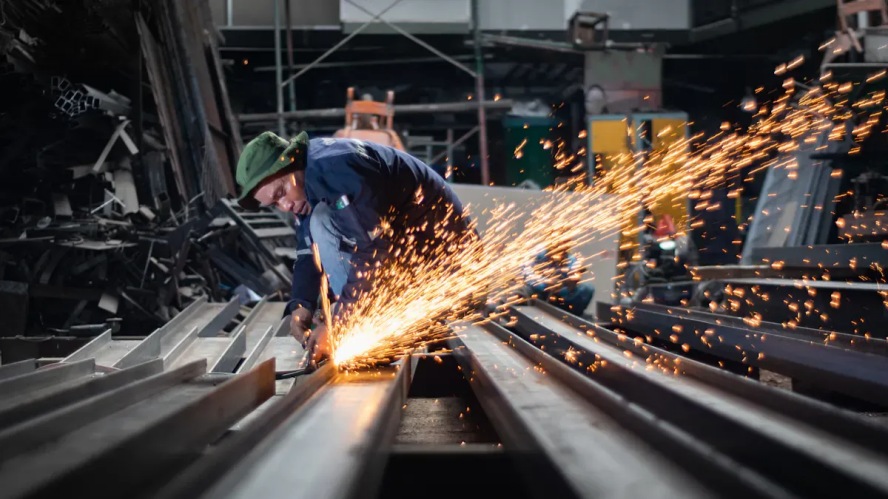
    Sheet metal fabrication changes flat metal sheets into useful parts or products by following several steps. Each step in the sheet metal fabrication process is important for the final result. Workers use cutting, bending, and assembling to make parts that are exact and strong. The table below shows how each step helps product quality in factories:   Step Description Impact on Quality Cutting Uses careful methods like laser and water-jet cutting. Makes sure parts are exact and less metal is wasted. Bending Uses tools like CNC bending for exact angles. Needed for building complicated shapes. Assembling Uses welding, riveting, or glue. Changes how strong and good the final product is.   Many businesses use the fabrication process to make metal p...

  • When Should You Choose Stainless Steel vs. Aluminum for Custom Industrial Enclosures?
    Feb 04, 2026
    Engineers and procurement managers often face a critical crossroads early in the design phase: selecting the primary material for the chassis or housing. While carbon steel is the budget standard, the real debate for high-performance or harsh-environment applications typically narrows down to two contenders: Stainless Steel (304/316) and Aluminum (5052/6061).   Making the wrong choice doesn't just affect the Bill of Materials (BOM) cost; it impacts thermal management, electromagnetic interference (EMI) shielding, and the longevity of the equipment in the field. This guide breaks down the physical and economic trade-offs to help you specify the correct material for your next Custom Sheet Metal Fabrication project. The Weight Factor: Strength-to-Weight Ratio If your application is sta...
  • What Are the Key Design Considerations for OEM Chassis and Electrical Cabinets?
    Feb 04, 2026
    Designing enclosure hardware is a balancing act between structural rigidity, thermal efficiency, and regulatory compliance. Whether you are developing a 1U server for a data center or a NEMA-rated enclosure for a factory floor, the difference between a successful product and a costly prototype failure often lies in the nuanced details of the sheet metal design.   For engineers and product developers, moving from a PCB layout to a physical housing requires a shift in thinking—from electronics to mechanics. This guide analyzes the critical engineering parameters you must define before initiating Sheet Metal Production. 1. Dimensional Compliance and the "U" Standard For OEM chassis design, strictly adhering to the EIA-310-D standard is non-negotiable. A chassis that is 1mm too wi...

Leave A Message

Leave A Message
If you are interested in our products and want to know more details,please leave a message here,we will reply you as soon as we can.
Submit

Home

Products

whatsApp

contact